
Taş gibi: Of language mis-steps, traffic jams and hot Turkish women


Taş means stone in Turkish (Image from www.resimler.co)

Taş means stone in Turkish (Image from http://www.resimler.co)

Taş gibi.”  I heard this phrase a lot while two young Turkish American men were living in our house.  I never could quite get the context, as their voices would lower to decibels my old ears couldn’t decipher well.  This usually took place as these young men were checking out their possible future dates on Facebook, for example.

During these episodes, Kenne, the Queen of Manners and Maintenance of Ladylike Behavior would “hurumph!” her way out of the room – dragging her handmaiden Zenne (the nervous Nellie like a bowl of quivering jelly) out of the room at breakneck pace.  It reminded me of the goat-bleating sound of horror my grandmother made when I was in the unfortunate position of explaining to her the OTHER purpose for dental dams back in the days when I did HIV/AIDS prevention work with women.  I will not elaborate further.

But in any case, back to the term taş gibi.  I had learned early on that taş referred to “stone” and I remembered this as I knew someone with Taş in their last name.  It  had also been early on in my time with M. that I learned the term buz gibi,  which when translated directly means “as cold as ice.”  So, as I sat at the dining room table with these young men, I finally put it together – something is like stone.  “Horrible,” I though sadly, “that they are referring to these young women as being like stone – they should give them a chance – maybe they are just shy!” I never shared these views as I didn’t want to interfere with the brotherly good time that was going on at the table.  Boys will be boys and all – they got enough feminist propaganda from me anyway, I thought.  As I was thinking this to myself, pretty much the ENTIRE puppet troupe was cackling and howling, slapping their knees and falling all over themselves with a case of the contagious giggles.

Istanbul's Fatih Sultan Mehmet Bridge in traffic (Image from Today's Zaman)

Istanbul’s Fatih Sultan Mehmet Bridge in traffic (Image from Today’s Zaman)

After months and months of watchful attempts for moments in which the use of my newly understood phrase did not appear – I found my moment.  Gülay was very kindly going out of her way to give us a ride.  There we were, sitting in the thick, stalled Istanbul traffic, trying to get onto the Fatih Sultan Mehmet bridge (a.k.a. the “second bridge”) to cross the Bosphorus on the way to Sabiha Gökçen Havaalanı for our trip to Dalyan to visit the Archers of Okçular for the first time.  We were stuck, nothing was moving, minutes and minutes had gone by and the three young men and my husband in the back of the car had entirely demolished the sesame-covered simit that Gülay had bought from the vendor out of the window.  Feeling very proud of myself – I gestured around at the traffic with my right hand, and said with beaming pride “Taş gibi!”

Silence hit the car – and I began to blush.  I thought, perhaps my accent is bad, although M. tells me that it is not as do others, so, I said it again “Taş gibi! No?”.  Gülay looked at me with a sidelong glance.  “What is it you are trying to say?” she asked calmly, always gentle with me as she is (and for which I am grateful).

I explained through the blushing “the traffic….it’s, well, it’s stuck – you know – like stone!”  At this point the entire human and puppet population of the car began to guffaw as if there was no tomorrow. I didn’t know what to do with my face or hands – I knew that the horrible truth would be out in moments but that I just had to wait.

Taş gibi!” Gülay giggled, “M. you need to explain this term to your wife.”  Before M. could get there – one of Gülay‘s sons snorted out an explanation “it means a hot chick – you know – not super skinny – but with some meat on her bones – a real lady – not a thinspiration type!”

Here is what we are talking about:

This is what  taş gibi is all about! (Image from galeri.uludagsozluk.com)

This is what taş gibi is all about! (Image from galeri.uludagsozluk.com)

Finally, I had the freedom to laugh along with them.  And all agreed that indeed, the traffic could be described as Taş gibi as well!

Posted in Cross-cultural learning moments, Gendered moments, Turklish Moments, Visits from the Karagöz puppets | Tagged , , , , , , | 8 Comments

The Karagöz puppets return…with a kabak and some çapak for my Turkish lesson


Kabakler - a number of squash (Image by Liz Cameron)

Kabakler – a number of squash (Image by Liz Cameron)

Early yesterday morning as I lay sprawled out in bed, I felt a tap on my shoulder. It was the learned Hacivad Bey Puppet who for once, oddly enough, was standing right next to the Karagöz puppet himself. These two usually do not get along – so their presence together made me sit up and take notice.

“Bey efendiler, what are you up to so early in the morning,” I managed, my voice horse with sleep.

“Well, M’lady,” Hacivad Bey began, “we have come to determine two things, that you need to lighten up a bit and move away from this fear-related writing for now and also that you need to kick it up a few notches on your Turkish learning – your friend over at Turklish has some great ideas about infusing Turkish into your everyday life. This, of course, will help you feel less afraid to walk around the city – and probably will help M. as well.”

“Hell,” Karagöz inserted, pushing Hacivad Bey out of the way rather rudely, “and you just need to have some more fun! Enough with the deep conversations on gender, class, culture and violence against women – get up, go out with your husband and have fun with him – and work on your Turkish!!!”

“Fun,” I thought, rubbing the çapak out of my eyes, “how am I going to be FUN when I’m not feeling very FUN these days? And FUN in TURKISH? Sigh” And as I took the tissue from my bedside to remove the çapak from my eyes – or what my Mother referred to as “the sleep” and yet others referred to as “eye boogers,” it hit me. My relationship with speaking Turkish began with this very word – çapak. If I am to re-invigorate my attention to learning more Turkish, let’s start there.

This was the first word I learned in Turkish, oddly enough. Way back in 2004, M. met me for coffee early in our courtship and said “Oh, you have some çapak in your eye,” and gently brushed the crusty nugget of sand-sized material out of my left eye socket.

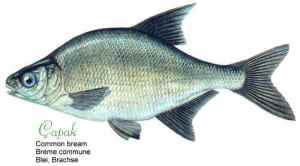
Here is a çapak - or a common bream fish

Here is a çapak – or a common bream fish

Hmmm,” I reflected, “çapak. That’s an interesting sounding word.” After reciting the Turkish alphabet to me, began to rhyme in Turkish – you know – çapak, tabak, kabak…in other words, eye booger, table and squash. At this moment, Mercan Bey, the Arabian Spice Trader Puppet called out from somewhere, likely the kitchen, as he is re-arranging our spice shelf these days. “don’t forget that çapak also refers to sea bream – a fish!”

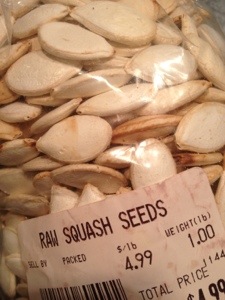
Later that night, I sat on the couch with M. to watch our secret, guilty pleasure – “The Bachelor.” This is a television show in which one man or one woman takes his/her time in assessing 25 marriage candidates only to eventually choose one with whom to tie the not. Aside from the obvious gender commentary that runs rampant on our couch as we scream at the television, we are obsessed with what this television puts people through from a group psychology perspective – forget even getting as far as problematic gender imagery. And as we sat there, along with the Karagoz puppet troupe lined up on the couch behind us, M. cracked and munched, cracked and munched his favorite roasted pumpkin seeds – aka the ones from the kabak mentioned above.

As I had been working on my Turkish the whole day, I turned to him, jubilant, and exclaimed “Kabak!” I, of course, thought I was showing my ever-increasing knowledge of Turkish. M., on the other hand, nearly spit his kabak seeds in my face as he laughed out loud. After a kiss on the cheek, he explained his intense mirth – “Canım (dear),” he explained, “to say KABAK to someone means – well – they are a simple minded, not-too-rich-in-the-brains-department kind of person, um, in other words, an idiot!”

And so goes another day in the life of a Turkish American couple where the vernacular is usually the devil in the details.


20130218-165704.jpg

Posted in Cross-cultural learning moments, Turkish Food!, Turklish Moments, Visits from the Karagöz puppets | Tagged , , , , | 7 Comments

Uç kadından biri: One billion Karagöz puppets rising!


One billion rising on V-day! (Image from UNLV.EDU)

One billion rising on V-day! (Image from UNLV.EDU)

One billion rising. I’ve seen a plethora of these three words over the past weeks, and so have the Karagöz puppets (when they sneak on my iPhone or iPad at night when I’m sleeping).

“What billion things, pray tell,” Hacivad Bey leaned in to ask me, “are rising?”

“Balloons?” Safiye Rakkase suggested, hopefully, “pink ones, for Valentine’s day?”

“Yeast bubbles for sourdough bread?” Mercan Bey questioned, his hands full as he was making his new favorite New World bread by hand for the afternoon meal.

“Colorful kites on a breezy day?” Esma, the hippie puppet added in, a glint in her eye at the prospect of it.

“Well no, puppet friends,” I said with concern in my voice, and a serious tone. “This ‘one billion rising’ is a movement that is centered around women on Valentine’s day, which of course, on the face of it, is a day about love –“

“AND COMMERCIALISM!” Karagöz screeched as he swang into the conversation on our chandelier. “DON’T FORGET ABOUT THE MARKET ECONOMY TAKING ADVANTAGE OF THAT THIN OLD THING CALLED LOVE.”

“Well of course, yes, Karagöz,” I sighed, “I was getting to that. But actually, even WORSE than commercialism is the reality of violence against women. The number one billion was chosen, as I understand it, because one in three women will be beaten or raped in her life.”

A collective sigh and hush washed across the puppet troupe standing before me on the dining room table. All of the puppets started looking in different directions, becoming, for example, fascinated in the backs of their hands or their shoelaces.

In the silence of the puppets’ discomfort and consideration, I thought about how violence against women has touched my life. In addition to studying this matter as an academic, I have worked with men accused of committing acts of violence against women, have organized a “Rape Free Zone” to raise awareness of date rape on University campuses (re: both men and women) and have also been a survivor of violent acts committed by men on more than one occasion. The topic of violence against women is one that has, unfortunately, been a central theme in my life whether I like it or not, whether it has been for good or naught. It is also a topic that M. and I speak of openly – and one that he decries, educated by his own Anne (Mother, in Turkish) to “not be a macho, no matter what! And don’t hit women!” I won’t even get into the assumption that some of my well-meaning friends have intimated re: my Turkish husband’s predilection for “culturally normative”violence.

My thoughts were interrupted by Yedhuda Rebbe, who had stepped forth in the silence, head high as a stallion silent and strong in preparation for a race. “Yes,” he announced loudly, “violence against women.”

Silence abounded in the dining room. I waited to see where Yehuda Rebbe was going with this. His voice would hold sway over mine, to be sure, in teaching the puppets.

“I am a man, and over the many centuries I have lived as a member of this phantasmagorical, body-inhabiting Karagöz puppet troupe, I have seen a lot of it in the Sultan’s palaces – and beyond.” A shuffling and whispering commenced amongst the puppets. I tried to retreat into ‘fly on the wall’ status.

“Now, puppet friends, we have lived through much together as a group since our birth in the 1300s back in Bursa, Turkey. And none of you can deny that violence against women has been observed – but also that the tolerance for this is shifting. We see this when we sneak onto M’lady’s smartphone and iPad to learn about the modern world..this is wrong and this shall not be tolerated. We cannot ignore this anymore.”

Raising her fist in solidarity with Yehuda Rebbe, Esma the hippie puppet voiced her support for his sentiments as if her heart had melted into her voice like the snow coming down from the Uludaĝ mountains in the spring rivers.

Zenne, the puppet known as the ultimate nervous Nellie like a bowl of jelly made her way to the front of the crowd, sidling up to Esma – who placed a protective and supportive arm around her. “I may be silent much of the time, and nervous, but I have read of this matter, violence against human women. And I want to take this opportunity to share this information from what M’lady says is a well-done study from the United Nations with you.” (An article about which you can find here – with Turkey featured).

In the old world of the Sultan’s palace, we did not document such incidents, and indeed we likely accepted violence as between a man and a woman – or just a non issue. In today’s Turkey – the remnants of the Ottoman Empire in which we were born – this is as much of a problem as it is here in our new adopted country here with M’lady.” Shivering a bit, she drew strength as the puppets moved their camel-skin hands forward one by one, shoulder to shoulder until all of that puppet love and energy manifested on Zenne’s shoulder

“Here,” she said, her voice shaking, “is what we know about violence against women in Turkey…39% of women report suffering intentional physical violence by a man at some time in their lives. And that’s just physical violence – violence can take other forms.”

“And here,” she said a bit more strongly now, “is what we know about the United States…22% of women report suffering intentional physical violence by a man at some time in their lives”

There were some dejected looks, some crying and some weeping. But before I knew it, the entire Karagöz puppet troupe was rising, floating, gathering hands together and swirling messages of hope and reality to the other Karagoz puppets all around the world – and other tribes of puppets in the United States and beyond (such as, for example, the Sultan of Nutcrackers and his collection down in Provincetown) – and across all of the many the oceans and lands between our dining room and Türkiye. May some of that good energy infuse in all the right places.

Violence against women is a universal phenomenon…you can learn more by clicking this link.

And to learn more about what is happening re: One Billion Rising in Turkey – you can check out a recent article in Today’s Zaman, one of the English-language paper in Turkey.

But most of all, please focus on love today, in all of its shapes and forms.

Posted in Gendered moments, Turkish Controversies, Visits from the Karagöz puppets | Tagged , , , , , , , | 9 Comments