Keşmekeş II: When life gives you limonlar…


20130220-124119.jpgYet again, Slowly-by-slowly has been off the grid with major health problems with pain that has made it hard to read, write or do much of anything. Without wallowing in self pity too much, I must say that my life is still somewhat described by the Turkish word keşmekeş. You can read a little more about that by clicking here. Yesterday, my doctor talked to me about the concept of “radical acceptance” – So here I am!

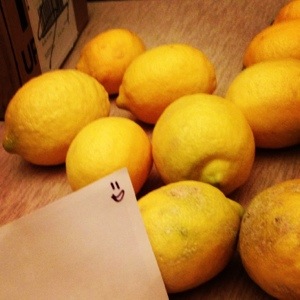
…And so it was with great jubilation a few months ago that I opened a large heavy box sent to me by my family in the Southwest – to find about 25 lemons! In the United States we have a saying, when life gives you lemons, make lemonade! What better antidote for keşmekeş? Given the keşkemeş that’s rolling in our beloved Turkey right now, may this be a diversion. I’ll do my best to post on that tomorrow as I’m so tired of being tired, done with isolating myself and pained of being pained as I wait for a big & unexpected surgery! No whingeing allowed, as the Brits might say!

So, back to the limonlar, as trite as this saying may be, and it has become an overused phrase, seeing the lemons tumble out across my dining room table sure gave me a giggle (or three). And my family knows that I am always up for a cooking challenge. One of my major coping mechanisms is to cook like a whirling dervish (when İ can manage it, which has not been for months) as my husband puts it. And in February, with these lemons rolling around on my table I had the perfect opportunity to go the limon crazy!

But I was not the only one to go limon crazy…Karagöz, well, he went wild as well. Why, you may ask, would Karagöz go wild at a box of lemons? Well, in traditional versions of the Karagöz Oyunlari, as some of you may know, there is a longstanding feud between Karagöz and Hacivad – about anything and everything.

In my own world of Karagöz puppetry, these two generally steer clear of any puppet battles (you can read about some of my puppet battles by clicking here). But they do erupt once in a while. And these lemons were the start of it all….as the tension between Karagöz the oppositional trickster and Hacivad Bey the learned Sufi elder had been brewing for some time (from opposite ends of the house, usually)…it was ready to rock. And it started like this:
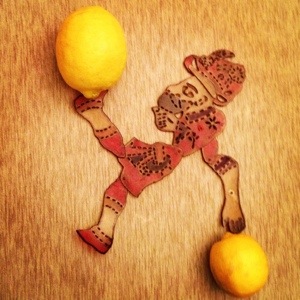
20130220-124146.jpgKaragöz began the banter, saying “finally, something fun to play with – let’s have a futbol match” while kicking the lemons around the table, some of which dropped on the floor and got bruised. Our dog came up and sniffed them before determining that they were not good to eat.

Hacivad Bey entered the room with a gallant leap down the stairs “Stop ruining these regal citrus fruits – we must put them to good use!” careening around the table after the futbol-mad Karagöz, Hacivad Bey proclaimed “I will be a human shield for these, our fruity brethren and sistren!”
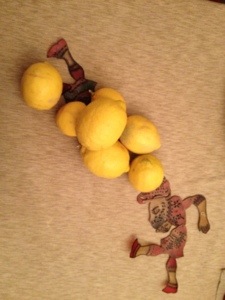
Karagöz and Hacivad battle over lemons (Image by Liz Cameron)

Karagöz and Hacivad battle over lemons (Image by Liz Cameron)

Karagöz hooted – “Oh – you old softy – what antiquated language you are using – why do you care a whit about lemons?” And before I could say a word, Hacivad Bey was covered in a pile of lemons, with only his legs showing, if you really looked hard. Meanwhile, Karagöz did a headstand on top of the pile.

Soon, the rest of the puppets ensnared Karagöz and rescued Hacivad Bey – only to engage in a debate about what to do with the lemons.
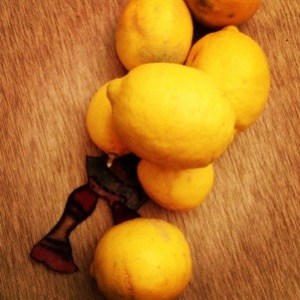
 

20130220-124225.jpgChoosing an egalitarian route, the lemons were used proportionately to the votes of all the puppets:

10 lemons went to a lemon souffle (see recipe here)

5 lemons went to a lemon glaze for lemon zest muffins (see recipe here)

5 lemons went to lemon-almond shortbread cookies with lemon glaze (see recipe here)

5 lemons were squeezed into ice cube trays for use throughout the rest of the winter season

And then, all were full of limon goodness, and fell asleep in a happy pile.

So thank you once again, family, for sending me this magic box of sunny yellow happiness! I know that it got me through some of the worst of my keşmekeş!


Posted in A Karagöz puppet battle, Turkish Food!, Visits from the Karagöz puppets | Tagged , , , , , , , | 17 Comments

Taş gibi: Of language mis-steps, traffic jams and hot Turkish women


Taş means stone in Turkish (Image from www.resimler.co)

Taş means stone in Turkish (Image from http://www.resimler.co)

Taş gibi.”  I heard this phrase a lot while two young Turkish American men were living in our house.  I never could quite get the context, as their voices would lower to decibels my old ears couldn’t decipher well.  This usually took place as these young men were checking out their possible future dates on Facebook, for example.

During these episodes, Kenne, the Queen of Manners and Maintenance of Ladylike Behavior would “hurumph!” her way out of the room – dragging her handmaiden Zenne (the nervous Nellie like a bowl of quivering jelly) out of the room at breakneck pace.  It reminded me of the goat-bleating sound of horror my grandmother made when I was in the unfortunate position of explaining to her the OTHER purpose for dental dams back in the days when I did HIV/AIDS prevention work with women.  I will not elaborate further.

But in any case, back to the term taş gibi.  I had learned early on that taş referred to “stone” and I remembered this as I knew someone with Taş in their last name.  It  had also been early on in my time with M. that I learned the term buz gibi,  which when translated directly means “as cold as ice.”  So, as I sat at the dining room table with these young men, I finally put it together – something is like stone.  “Horrible,” I though sadly, “that they are referring to these young women as being like stone – they should give them a chance – maybe they are just shy!” I never shared these views as I didn’t want to interfere with the brotherly good time that was going on at the table.  Boys will be boys and all – they got enough feminist propaganda from me anyway, I thought.  As I was thinking this to myself, pretty much the ENTIRE puppet troupe was cackling and howling, slapping their knees and falling all over themselves with a case of the contagious giggles.

Istanbul's Fatih Sultan Mehmet Bridge in traffic (Image from Today's Zaman)

Istanbul’s Fatih Sultan Mehmet Bridge in traffic (Image from Today’s Zaman)

After months and months of watchful attempts for moments in which the use of my newly understood phrase did not appear – I found my moment.  Gülay was very kindly going out of her way to give us a ride.  There we were, sitting in the thick, stalled Istanbul traffic, trying to get onto the Fatih Sultan Mehmet bridge (a.k.a. the “second bridge”) to cross the Bosphorus on the way to Sabiha Gökçen Havaalanı for our trip to Dalyan to visit the Archers of Okçular for the first time.  We were stuck, nothing was moving, minutes and minutes had gone by and the three young men and my husband in the back of the car had entirely demolished the sesame-covered simit that Gülay had bought from the vendor out of the window.  Feeling very proud of myself – I gestured around at the traffic with my right hand, and said with beaming pride “Taş gibi!”

Silence hit the car – and I began to blush.  I thought, perhaps my accent is bad, although M. tells me that it is not as do others, so, I said it again “Taş gibi! No?”.  Gülay looked at me with a sidelong glance.  “What is it you are trying to say?” she asked calmly, always gentle with me as she is (and for which I am grateful).

I explained through the blushing “the traffic….it’s, well, it’s stuck – you know – like stone!”  At this point the entire human and puppet population of the car began to guffaw as if there was no tomorrow. I didn’t know what to do with my face or hands – I knew that the horrible truth would be out in moments but that I just had to wait.

Taş gibi!” Gülay giggled, “M. you need to explain this term to your wife.”  Before M. could get there – one of Gülay‘s sons snorted out an explanation “it means a hot chick – you know – not super skinny – but with some meat on her bones – a real lady – not a thinspiration type!”

Here is what we are talking about:

This is what  taş gibi is all about! (Image from galeri.uludagsozluk.com)

This is what taş gibi is all about! (Image from galeri.uludagsozluk.com)

Finally, I had the freedom to laugh along with them.  And all agreed that indeed, the traffic could be described as Taş gibi as well!

Posted in Cross-cultural learning moments, Gendered moments, Turklish Moments, Visits from the Karagöz puppets | Tagged , , , , , , | 8 Comments

The Karagöz puppets return…with a kabak and some çapak for my Turkish lesson


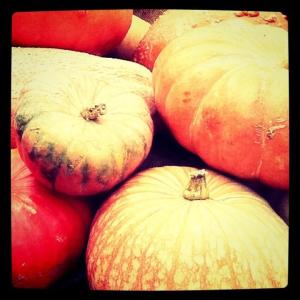
Kabakler - a number of squash (Image by Liz Cameron)

Kabakler – a number of squash (Image by Liz Cameron)

Early yesterday morning as I lay sprawled out in bed, I felt a tap on my shoulder. It was the learned Hacivad Bey Puppet who for once, oddly enough, was standing right next to the Karagöz puppet himself. These two usually do not get along – so their presence together made me sit up and take notice.

“Bey efendiler, what are you up to so early in the morning,” I managed, my voice horse with sleep.

“Well, M’lady,” Hacivad Bey began, “we have come to determine two things, that you need to lighten up a bit and move away from this fear-related writing for now and also that you need to kick it up a few notches on your Turkish learning – your friend over at Turklish has some great ideas about infusing Turkish into your everyday life. This, of course, will help you feel less afraid to walk around the city – and probably will help M. as well.”

“Hell,” Karagöz inserted, pushing Hacivad Bey out of the way rather rudely, “and you just need to have some more fun! Enough with the deep conversations on gender, class, culture and violence against women – get up, go out with your husband and have fun with him – and work on your Turkish!!!”

“Fun,” I thought, rubbing the çapak out of my eyes, “how am I going to be FUN when I’m not feeling very FUN these days? And FUN in TURKISH? Sigh” And as I took the tissue from my bedside to remove the çapak from my eyes – or what my Mother referred to as “the sleep” and yet others referred to as “eye boogers,” it hit me. My relationship with speaking Turkish began with this very word – çapak. If I am to re-invigorate my attention to learning more Turkish, let’s start there.

This was the first word I learned in Turkish, oddly enough. Way back in 2004, M. met me for coffee early in our courtship and said “Oh, you have some çapak in your eye,” and gently brushed the crusty nugget of sand-sized material out of my left eye socket.

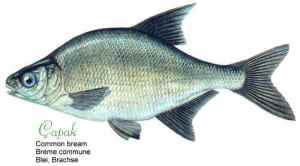
Here is a çapak - or a common bream fish

Here is a çapak – or a common bream fish

Hmmm,” I reflected, “çapak. That’s an interesting sounding word.” After reciting the Turkish alphabet to me, began to rhyme in Turkish – you know – çapak, tabak, kabak…in other words, eye booger, table and squash. At this moment, Mercan Bey, the Arabian Spice Trader Puppet called out from somewhere, likely the kitchen, as he is re-arranging our spice shelf these days. “don’t forget that çapak also refers to sea bream – a fish!”

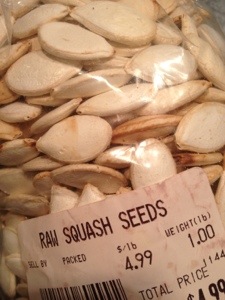
Later that night, I sat on the couch with M. to watch our secret, guilty pleasure – “The Bachelor.” This is a television show in which one man or one woman takes his/her time in assessing 25 marriage candidates only to eventually choose one with whom to tie the not. Aside from the obvious gender commentary that runs rampant on our couch as we scream at the television, we are obsessed with what this television puts people through from a group psychology perspective – forget even getting as far as problematic gender imagery. And as we sat there, along with the Karagoz puppet troupe lined up on the couch behind us, M. cracked and munched, cracked and munched his favorite roasted pumpkin seeds – aka the ones from the kabak mentioned above.

As I had been working on my Turkish the whole day, I turned to him, jubilant, and exclaimed “Kabak!” I, of course, thought I was showing my ever-increasing knowledge of Turkish. M., on the other hand, nearly spit his kabak seeds in my face as he laughed out loud. After a kiss on the cheek, he explained his intense mirth – “Canım (dear),” he explained, “to say KABAK to someone means – well – they are a simple minded, not-too-rich-in-the-brains-department kind of person, um, in other words, an idiot!”

And so goes another day in the life of a Turkish American couple where the vernacular is usually the devil in the details.


20130218-165704.jpg

Posted in Cross-cultural learning moments, Turkish Food!, Turklish Moments, Visits from the Karagöz puppets | Tagged , , , , | 7 Comments