
Babane, Anane & Kaynana make jam: A lesson in leading, following and collaborating


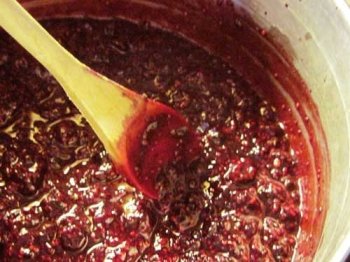
Cooking raspberry jam

Cooking raspberry jam

This month, I am reflecting on work as part of the Blogher NaBloPoMo challenge. And I sure have a lot to say on the topic when it comes to my job at the University.

But if I really think about it, one way I really learned how to work was by watching my Granny and my Grandmother work hard for the family through providing nourishment and healing.

Often, this involved growing things and cooking things, But what comes to mind most is jam. Yes, you read that right, jam as in sour cherry jam, quince jam, gooseberry jam or raspberry jam. No jelly need apply.

For the Turks and Turklishes out there, My Granny was my anane and my Grandma was my babane. And let me tell you, those women knew how to work.
They made everything for breakfast, lunch, dinner a cold or a belly ache, by hand, usually from scratch, and often with items from their kitchen gardens. I barely remember them outside of the kitchen, truth be told.

In the summer, the kitchen gardens were a major source of important bits and pieces. My babane, for example regularly harvested of a snitchet of chervil, dill or chives from just outside the kitchen door to add flavor to a dish.

My anane, on the other hand was more likely to look for raspberries, gooseberries or rhubarb in the back garden for jam – but also for the occasional berry fool or pie or pastry. But she also had an herbal garden on the south side of the house where she grew medicinal herbs That went into twisty concoctions that made my nose curl. I’ll leave those vile concoctions for another day’s description.

What was most memorable about watching my anane and babane work was the process of home canning in the summertime – and that’s where I learned all about leadership and collaboration.

Let me tell you that is hard And dangerous work, canning vegetables and fruit over massive boiling pots in a house with no air conditioning in the height of July afternoon. My babane canned a lot of tomatoes… But I was rarely there to watch it. I learned more about watching her stretch them through the winter season into all sorts of meals, usually a nice spaghetti sauce.

In late June, my mother and my anane would always make raspberry jam, gooseberry jam and a mix of raspberry gooseberry jam. They made so many home canned wax sealed jams that we had them all year long, and you could really taste the sunshine in them.

And I saw that all that hard work they did, sweat dripping down their brows furrowed with the bird’s feet of deep concentration about the viscosity of the bubbling sugary mixture, and whether it was “time” – that “time” thing meant that the magic of jam perfection had been achieved. I still act the same in my own work, although it isn’t jam I produce.

In many ways, it is the images of the raspberry and gooseberry jam making that allows me to relate to my kaynana or rather the stories about her, in which she would make great steaming vats of sour cherry jam, M.’s favorite, so that he could enjoy it for as long as it would last. It’s a romantic image for this American lady,the making of some exotic sounding jam that we don’t have here.

Yet, I know full well from watching my anane make gooseberry raspberry jam in the sticky swamp of a hot Cape Cod summer, that this was no feat for the weak hearted. It is all you can do to avoid hot splatters of red green jam that easily make sugar burns like odd egg-shaped freckles on your arm at a rate faster than sunburn In the noon day sun. Work has consequences, despite it’s necessity. I Watched my anane lead at some point when she was the expert, and I watched my Mother lead at other points as she was the heavy lifter. There was leading and following and collaborating in consideration of whether the jam was ready or not. It was a dance of leadership, collaboration and following all at different moments with different pirouettes.

When my babane died, at her memorial, I remember that she was the one who taught me that the work of preparing food is love. But teaching a young woman to cook for her family and modeling that for all to see is also a lesson in the work of childrearing & responsibility, jam or no jam.

So in answer to today’s Blogher NaBloPoMo daily prompt for writing on work, which was:

Do you feel most comfortable being a leader, a follower, or a collaborator?

I would have to say, it depends on what type of jam I’m making that day. So thank you to my anane and my babane for teaching me about the necessity for all three roles in my work life.

Posted in Family Challenges, Gendered moments, Turkish Food! | Tagged , , , , , , , , , , | 10 Comments

Take your kaynana to work day: A Turkish mother-in-law’s observations of an academic


My gracious and elegant Kaynana (Turkish for mother-in-law)

My gracious and elegant Kaynana (Turkish for mother-in-law)

Yesterday, I wrote about my Turkish mother-in-law (kaynana) – or rather – my phantom mother-in-law, as she passed away before I had the honor of meeting her.  During the time I have been with M., I have gleaned bits and pieces of information that have led me to develop a sense of her, but it has only been over the past couple of years, at the height of my workaholism, that I began to imagine that my kaynana was in the car, in the office or in the classroom with me.  Let’s not even get into why I didn’t imagine either of my own mothers in the car with me – I think it was something about someone so different, with such a different frame of reference that made my mind choose her.

As Blogher’s prompt for today’s December NaBloPoMo writing challenge poses the question “what are you a pro at,” let me respond by addressing how my kaynana responds to the way I teach my students and the ability I have to write – and write a lot. I choose these topics as they are the things I feel most confident about in my work life – producing academic scholarship and running student-centered classrooms that facilitate lively discussions and active learning.

So, just to check in, no, I am not hallucinating, my kaynana is not really in the classroom with me, her imaginary presence is more like “checking out” what a woman of a different culture and era might have lived like compared to my own experience.  It’s a way of asking myself – “gee, self, what is it that I am doing here?” And by way of helping me to find my answer, my phantom kaynana might say things such as, “well, are you happy, canım?” or “well, let me put that question back to you, dear? Why don’t you think about that some more over a glass of çay.  You never seem to have time for that at work, though, and you often forget even to go to the ladies room you are so busy!”

Now let me preface all of this imaginary commentary from my take-my-kaynana-to-work days by illustrating that my kaynana was not the stereotypical, stay-at-home Turkish housewife.  While she did all those things, she was fluent in English, had studied ceramic art in France, read extensively and often took trips without her husband – to England, to India, to many parts of Europe. So, this was an empowered lady.  But she did not, as far as I know, work in the formal workforce at any point.  And, I am sure, her primary thoughts were about how she could and should support her husband and children, as that was what *she* was a pro at, work-wise.

Turkish Tea

Turkish Tea (Photo credit: Emre Ergin)

So, as I usually rush, wild-eyed and not-yet-caffeinated with hair un-coiffed out the door in the morning, before I know it, my kaynana is by my side, smoothing my hair, and reminding me that it is alright to take a few moments for the good of self-care (and presenting myself more attractively to the world).  “It is not,” I imagine her saying, “the antithesis of being an empowered woman to do so, canım.”  My kaynana is the reason I find myself in the pedicure bay once in a while, not to mention the hairdresser, as these things were not engaged in by my own mothers who generally eschewed such activities in favor of reading books or taking nature walks (both wonderful things).  It is hard for a busy and some might say workaholic woman such as myself to make time for such things, but every time I do, I relish the relaxation that comes along with it, and I have to thank.

And so it is in the moments before she appears beside me during my work hours that I ponder the questions, “what would kaynana think about my dusty office?” or “how would kaynana handle a grumpy student who behaved disrespectfully in class?”  or “what would kaynana think about how late I have to drive home from work?” During the days (and often nights) in my office, my kaynana is often my accompanist, ensconced graciously in the industrial, fire-proof royal blue chair next to my disastrous desk. Sometimes, she accompanies me to class, registering polite shock at the types of comments my students feel emboldened to make about my weight, my clothes, potential pregnancy status (really) or appearance or my hair.  “Really, these students, they need to show a bit more honor and respect for you,” she notes, with hushed alarm.

Portrait of Virginia Woolf by George Charles B...

Portrait of Virginia Woolf by George Charles Beresford Deutsch: Die zwanzigjährige Virginia Woolf, fotografiert von George Charles Beresford (Photo credit: Wikipedia)

I often teach at night, and try to do a bit of writing after class, when I am “juiced up” mentally, before the hour’s drive home.  As I write away into the night, my kaynana’s svelte arms rest gracefully on the shiny black plastic of the chair’s armrest, she sometimes poses a gentle question along the lines of “Are you happy doing this important work, canım, it must be important or you would not work so hard and long hours?” or “Perhaps I could get you a glass of tea to help you get through the last bit of this writing? I can see that you love to write, but why is it that you write *so* much when you could be home with my son?”  She is rightfully concerned, but I have the sense that she would have respected what some might call the need for a woman to have “a room of one’s own” to draw on Virginia Woolf’s famous phrase.  Mostly, she wishes that I would call a driver to take me home, “it is too late and too dark, canım, for you to be driving when you are so tired.”

So in some small ways, it has been my imaginary connection with my Turkish kaynana that has helped me to begin the process of finding a better balance in my work life.  I find the presence of my phantom mother-in-law a calming and supportive one, and I can only hope that she will continue to haunt me for years to come. Cök teşekürler ederim kaynana benim. 

Note: The Karagöz puppets would like me to announce that they are taking a sporadic vacation this month – and will only make occasional appearances here on Slowly-by-Slowly. They are exhausted and in need of a good, long nap. Instead, you will be hearing from me, Liz Cameron, as I have taken on the challenge of writing via dictation software for the coming month as part of Blogher’s December NaBloPoMo challenge – to write on the topic of “work” each day for the whole month. As some of you know, the past month has been a tough one for me, one in which I have realized that things are way out of whack for me when it comes to how I address my approach to work. Upon reflection, work is a central theme in the discussions and arguments that M. and I have as each half of a Turkish-American marital union, so I am hopeful for this to be a month of rich reflection on how east and west approach – work.

Posted in Gendered moments, Turkish-American Matters | Tagged , , , , , , | 9 Comments

What would my Turkish kaynana (mother-in-law) think? On working women and workaholism


From Mary Yücel's article on Turkish matriarchs from Today''s ZamanThe Karagöz puppets would like me to announce that they are taking a sporadic vacation this month – and will only make occasional appearances here on Slowly-by-Slowly. They are exhausted and in need of a good, long nap. Instead, you will be hearing from me, Liz Cameron, as I have taken on the challenge of writing via dictation software for the coming month as part of Blogher’s December NaBloPoMo challenge – to write on the topic of “work” each day for the whole month. As some of you know, the past month has been a tough one for me, one in which I have realized that things are way out of whack for me when it comes to how I address my approach to work. Upon reflection, work is a central theme in the discussions and arguments that M. and I have as each half of a Turkish-American marital union, so I am hopeful for this to be a month of rich reflection on how east and west approach – work.

Lately, I have been realizing how my workaholism has caused iceberg-like problems in my life, problems floating just beneath the surface that are both medical and mental. Now that I am stuck without a writing hand and meekly dependant on dictation software, I have been unable to work, and have had a lot of time to think. And I have been spending a lot of thinking time sitting in our living room drinking glass upon glass of Turkish çay with lemon, meditating on the tiny tinker’s sound of demitasse spoon on glass as I stir the sugar into oblivion. And sitting there, with my çay, in our living room, I sit with three achingly gorgeous black and white photos of my kaynana (Turkish for mother-in-law). And as I sit with these photos, I think about my current-day workaholism and about how my life might be different if I was a wife in Istanbul in my kaynana’s era…and how there might be some middle path that would work for me, and for M.

When I get burned out on analyzing my situation too much, I just go back to the content of those photos of my mother-in-law again. Clearly, my kaynana is the epitome of graciousness. Always dressed to the nines, she poses perfectly in those photos, nary a hair out of place and always looking at me with what can only be described as a deeply kind, understanding and warm-hearted smile. She has a muted glow emanating from her, even in these photos, and it gives me great comfort to feel that glow from her. I can only imagine what my kaynana must have looked like in real life, as I never had the chance to meet her. She died the same year as my biological mother.

Now, many people joke about the best mother-in-law being a dead mother in law – and all I say to that is “how crass!” Although, truth be told, I have never experienced a terrible one, I suppose. As a woman married to a Turkish man, I have noted that many write about the challenges of marriage to a Turkish man – especially with regard to the relationship with their kaynana – just try a google search and you will come up with a veritable cornucopia of commentary on the topic. Mary Yücel, for example, provides a typology of Turkish mother-in-laws – but takes a positive spin. Natalie Sayin, for example, writes with hilarity about her short-lived membership in the elite Turkish housewives club in a way that is a tiny window into her life with her kaynana. Zeynep Kilic writes about her “exotification” in the dating process – after two marriages to Turkish men ended, with a slight but large enough mention of the ways that their mothers, perhaps, got in the way. American women who are married to Turkish men often find solace in a secret conversation with me about the challenges of their relationship with their kaynana – knowing that I won’t spill the beans. And Turkish women that I know too, have referenced the struggles with their particular kaynana as well. Clearly, the Turkish male worship of their mothers rivals that of Mary, Mother of God worship – or the Virgin of Guadelupe, perhaps, but perhaps in less of a healthy way. And it is for this reason that I feel extremely lucky, as I have a wonderful, imaginary relationship with my phantom kaynana.

And so over these past weeks on medical leave, sitting in my pajamas at mid-day, depressed as all get out with my arm in a sling, reflecting on the past 7 years of my workaholic academic life and floundering about where to go from here, I can only imagine what my kaynana would think of me. I must admit, I would rather keep the glowing image of her in these three photographs, with an idealist image of a friendly, respectful relationship in which she taught me all she knew about Turkish cuisine, for example. But I can only imagine what she might have thought of her American daughter-in-law, the workaholic with fly-away hair, unkempt fingernails, microwave meals and a racing, workaholic heart most of the time. Now, although she did have household help given the family economics and culture of Istanbul at the time, M. tells me that she did much of the cooking and tending to her boys. So, as a feminist, of course, I must honor the fact that she, too, was a working woman.

And as these last couple of months came crashing down into my shoulder injury and parallel major depressive episode, it was, in part, the observation of these photographs of my kaynana as I ran out the door to work in what can only be described as a harried and frenzied state, that made me realize that my life was indeed massively out-of-whack, so to speak. While we cannot afford the luxury of the life my kaynana led, there is a lesson in the need for self-care, order and calm seas in one’s life.

Tomorrow, I will talk about how I have imagined the presence of my kaynana during a typically crazy American academic work day. I hope you will stay tuned!

Posted in Academic hell, Gendered moments, Turkish-American Matters, Visits from the Karagöz puppets | Tagged , , , , , , , , | 9 Comments