“They Also Faced the Sea”


They Also Faced the Sea, Provincetown

They Also Faced the Sea, an installation in Provincetown that captured the spirits of my puppets one difficult day (Photo credit: TheBeachSaint)

One evening a few weeks ago, the band of puppets found themselves escorting me down to Provincetown‘s McMillan Pier to pick up M., who was to arrive on the fast ferry from Boston.

The house had been a flurry of activity that day – with baking, cleaning and general “fluffing” preparations afoot since morning.  You would be surprised at how well a tiny troupe of dancing lady puppets from the Ottoman era can clean a modern-day kitchen, for example. And although all of the puppets (and their human, and her dog) were somewhat exhausted from the effort, they made their merry way down Commercial Street.

As we walked along the wooden pier towards the boat mooring, my heart sank a bit.  There were three ambulances with flashing lights waiting at just the spot M. arrives each Friday night.  Keying into my more paranoid side, the little chorus of dancing ladies began to whisper and worry, with a bit of hand-wringing thrown in for good measure. “What if,” one of them posited, “something happened to our dearly beloved M? He does have that basilary artery condition, you recall.” Heart pounding, I calculated the odds.

Sticking my hand quickly into my pocket to see if I could get a signal to text M. I realized this was a possibility…but before long I realized it was not the case, and thank goodness.  I realized this as I started to hear wailing – the wailing of a truly distraught woman.  I soon saw her, deep circles of soot-colored worry were growing around her eyes by the second, her hands placed to her mouth as if to staunch the flow of anguish.

The puppets did not know what to do with themselves – they were nowhere near a Çaydanlık to offer the lady a soothing glass of tea – and even Kenne, the Queen of Manners, was not totally sure what to do.  The woman was standing by her lonesome, Kenne thought, but would it be appropriate to go up and stand with her to try to comfort her?

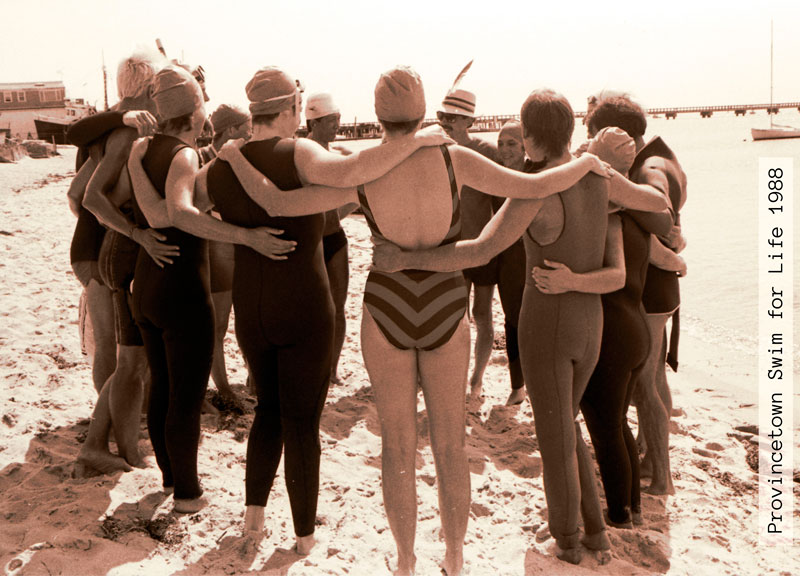
And as I looked   try to figure out how others were reacting and what I should do, I saw the women watching.  This is what they looked like:    Photo of an Art installation by Ewa Nogiec and Norma Holt on the Fisheerman's Wharf in ProvincetownLeft to right: Eva Silva, Mary Jason, Bea Cabral and Frances Raymond, Fisherman's Wharf, Provincetown (from iamprovincetown.com)
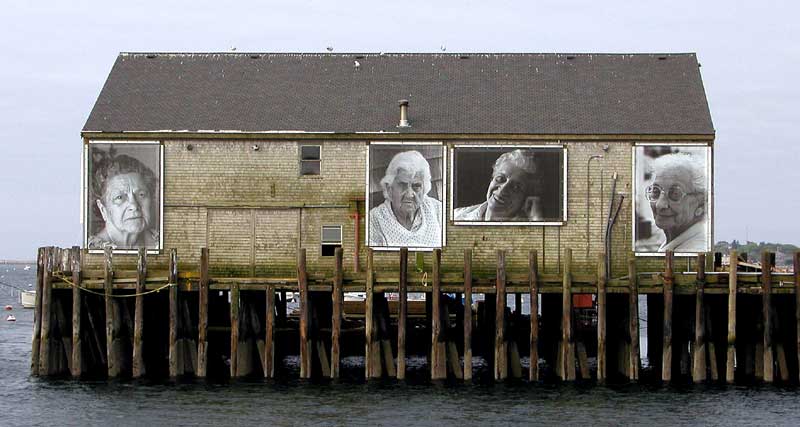
Photo of an Art installation by Ewa Nogiec and Norma Holt on the Fisheerman’s Wharf in ProvincetownLeft to right: Eva Silva, Mary Jason, Bea Cabral and Frances Raymond, Fisherman’s Wharf, Provincetown (from iamprovincetown.com)

Those watching women in the photos facing us were eternal, lovely, seasoned and worried yet calm – in a calm before the potential storm kind of way…and I could almost imagine their invisible tentacles reaching out across from their wharf to ours to comfort and soothe the woman crying ahead of me.  I soon saw that this woman’s loved one was being wheeled off of a large fishing vessel named the Sao Jacinto, restricted by the strictures of a flat board and head brace it was still easy to see that the man was in major pain.  Standing silently and trying not to stare, the onlookers – including my puppets – began to pray, each in their own way.  A pandemic of goosebumps made its way down the pier.

Putting a question of the wailing aside for a moment, I concentrated on those waiting women in a way I hadn’t since learning about them.  Here they were, faced with their modern-day counterpart – a young woman facing a potentially earth-shattering event in the life of her family either through death or disability…Focus on those women’s faces, each wrinkle and sag, well, it was easier than listening to the anguished moans she was trying to suppress at the sight of her loved one’s gashed head being secured on a flat board before being airlifted to Boston for surgery.  As the ambulance door clicked-hard-closed, the crying was muffled full stop.

they also faced the sea with san jacinto

The Sao Jacinto crept back into the bay through the foggy dusk, its sailors downtrodden after one of their own was taken away by ambulance – and the women looked on…(photo by Liz Cameron)

Turning to look to the water for M.’s boat, the fishing vessel pulled away through the sunset-illuminated fog, and past those women watchers.  I thought I saw them throw silvery skeins of protection lace around the men remaining on board…but I wasn’t sure.  I would like to think it could happen.

At just that moment, M’s ship turned the corner for the harbor…and before long he was in the arms of me, my dog and all of the puppets that inhabit my head – even the somewhat sobered Karagöz himself.  We hugged M. extra hard that day, remembering that despite the daily ups and downs of cross-cultural marriage, life is short and every moment is precious…

This amazing installation is described at iamprovincetown.com as follows: “They Also Faced The Sea” installation was designed to keep the spirit and the presence of Portuguese culture alive by Ewa Nogiec, artist, publisher of iamprovincetown.com and owner of Gallery Ehva, and Norma Holt, photographer. The installation of five larger-than-life black and white photographs of Provincetown women of Portuguese descent, mounted on a building at the end of Fisherman’s Wharf in Provincetown Harbor, is conceived as a tribute to the Portuguese community and its fishing heritage. Norma Holt’s photographs from Pilgrim Monument and Provincetown Museum co lection of Almeda Segura, Eva Silva, Mary Jason, Bea Cabral and Frances Raymond, are meant to represent all of the women of Provincetown who over the years have been the backbone of this vital fishing village. They came from a long line of hard-working people, immigrating mostly from the Azores and mainland Portugal. Their families fished the waters off Cape Cod for over 200 years, built a major fish packing and distribution industry and made an important contribution to the history and culture of Provincetown. Portuguese women faced the sea in many ways: as mothers, wives, sisters, friends and family of fishermen, as cooks, laundresses, nurses, teachers and telephone operators. They kept the culture alive, sang the songs, danced the dances, buried the dead, gave birth, cooked and kept the church at the center of their lives. Above all, they were resilient through good times and bad, their strength and courage easily matching and supporting that of their male seafaring counterparts.”


Posted in Gendered moments, Visits from the Karagöz puppets | Tagged , , , , | 2 Comments

Of prayer ribbons and swimming: The puppets cheer and mourn at Provincetown’s Swim for Life


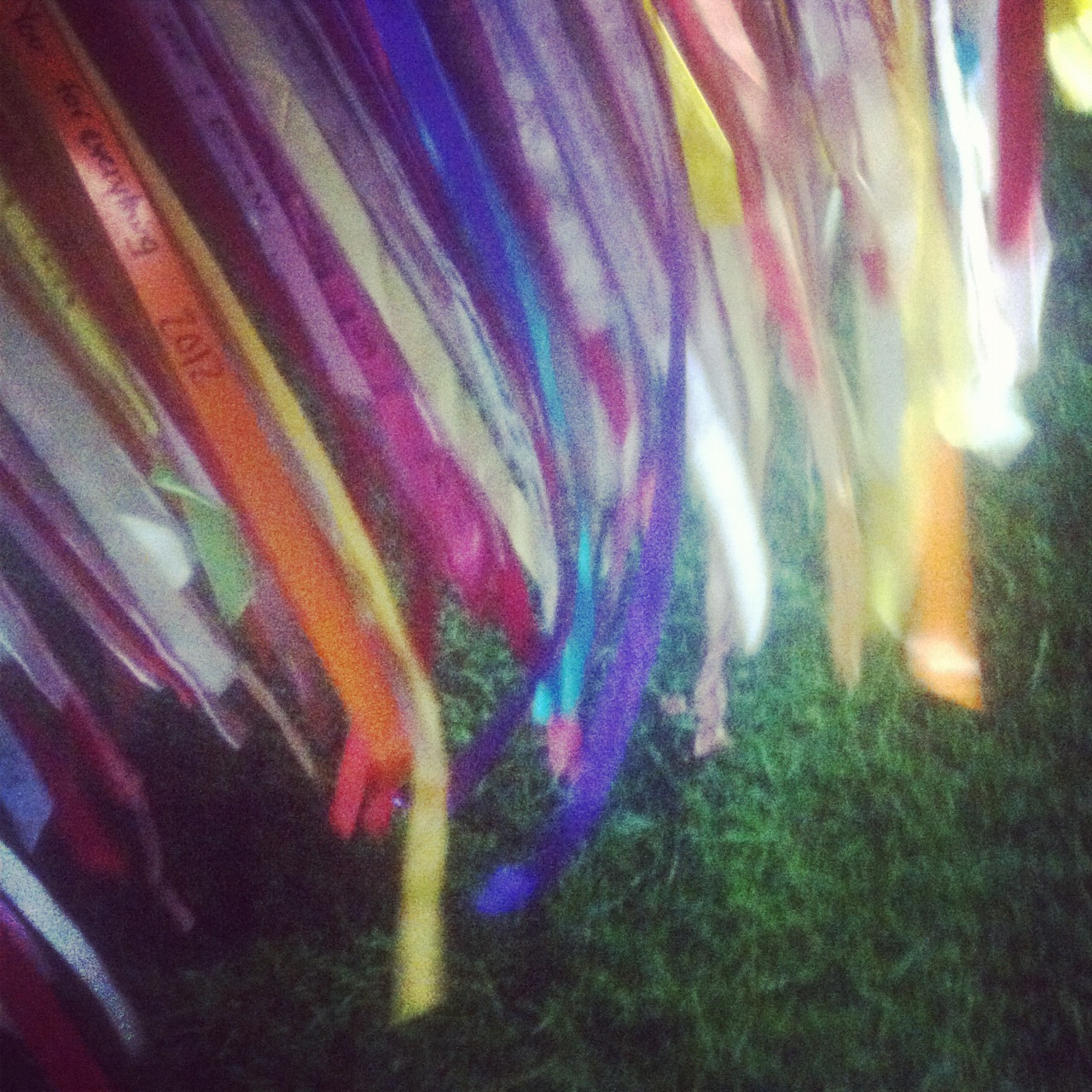
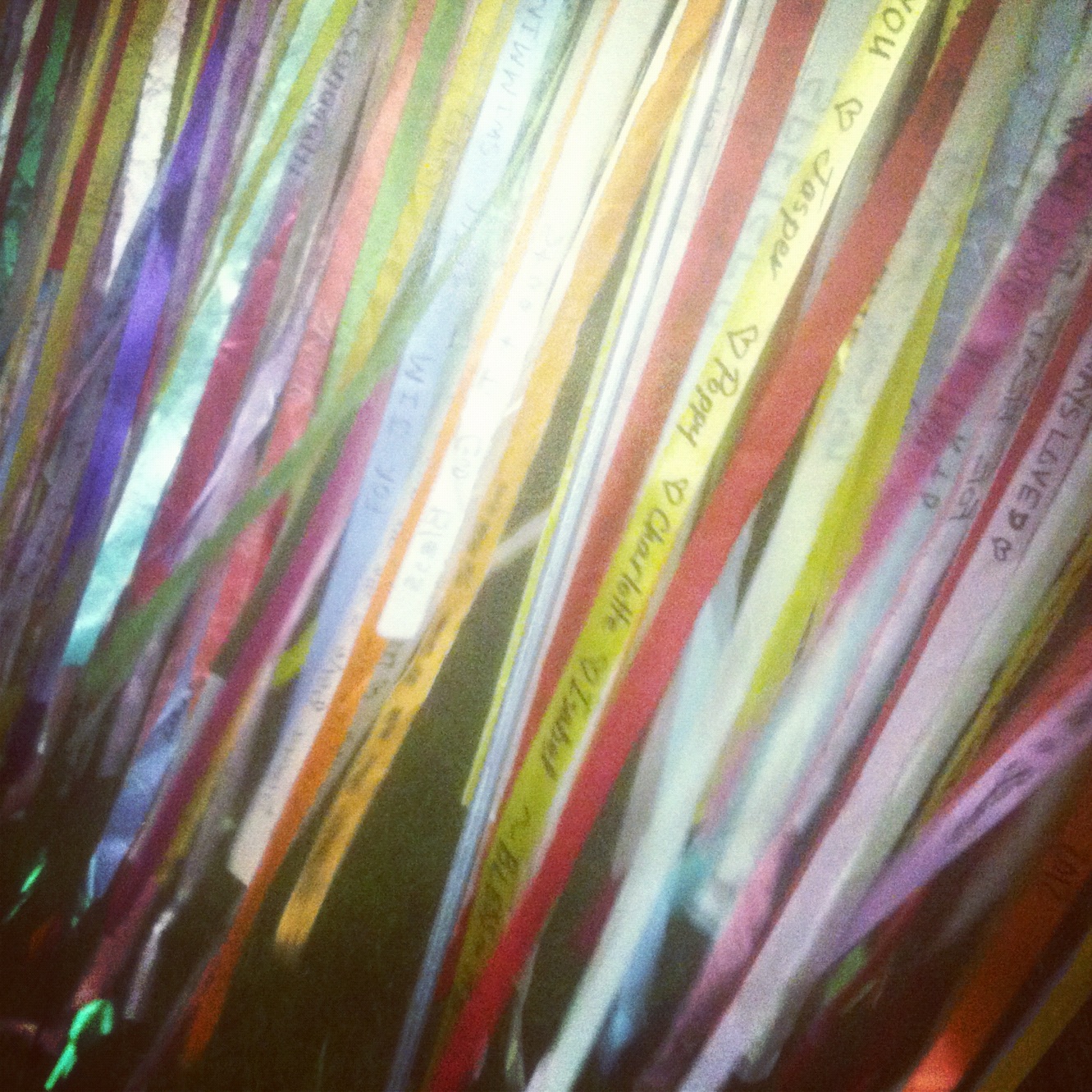
Prayer ribbons for 2012 Swim for Life in Provincetown, MA

Prayer ribbons to commemorate the dead and celebrate the living – for 2012 Swim for Life in Provincetown, MA (photo by Liz Cameron)

Last week, M. and I escorted the puppets (riding on the back of the dog, to be sure) down to the West End of Provincetown- after a close call with the resident evil cat (aptly named “Kato”) on Commercial Street – we continued on until we were in front of the library.  We heard the swish-swashing sounds of the ribbons before we saw them.

Entranced by their ebb and flow in the blue-dusk breeze, Esma, the tiny hippie puppet, stopped in her tracks.  Khadijah stopped just ahead of her – holding her arm out in front of Esma in a protective gesture, as if a car had stopped short.  And indeed, those ribbons, many of them, were in part about people who had stopped short of living their whole lives.

At the urging of all the puppets, including the grump Karagoz himself, who was just curious, we went up to read some of the ribbons.  The ribbon said things like this:

– Still talking about you! Eric M.

– For all the brave men & women & children that have fought AIDS, with Love, Jamie

– For Father & Raphael – Smile from above (w/Jane) – I’ll swim hard – Love, J.P

– To the cousin I never got to meet: Donald

– To Billy, The porch light is always on and always will be XXXXX

– To all us survivors

– To all still afflicted.

We all, M., the puppets, me, began to cry a bit, inside and out.  Even the dog stopped turning his head around to look for the cat behind us, sensing the welling of emotion within us.  I felt drawn to sit under the ribbons, letting their plasticated swish graze swash-like across my legs.  I wanted to swim in them, immerse myself in them, they were moving.  I think perhaps it was all the love welled up inside those ribbon writings.  At the time, I did not know what the ribbons were for – as there was no sign – but I knew it referenced losses from the HIV/AIDS epidemic.

Later that week, we learned about the Swim for Life & Paddler Flotilla, an annual fundraising event in Provincetown that has taken place for 25 years.  Our new, and already dear, friends had stood on the beach during the first of the annual swims, we learned.  So, the next week, after a lovely brunch with the pre-eminent resident Turkish-American family in town (i.e. the people that got here before us), we headed down to the West End in order to cheer on the swimmers coming in at the end of the race.   

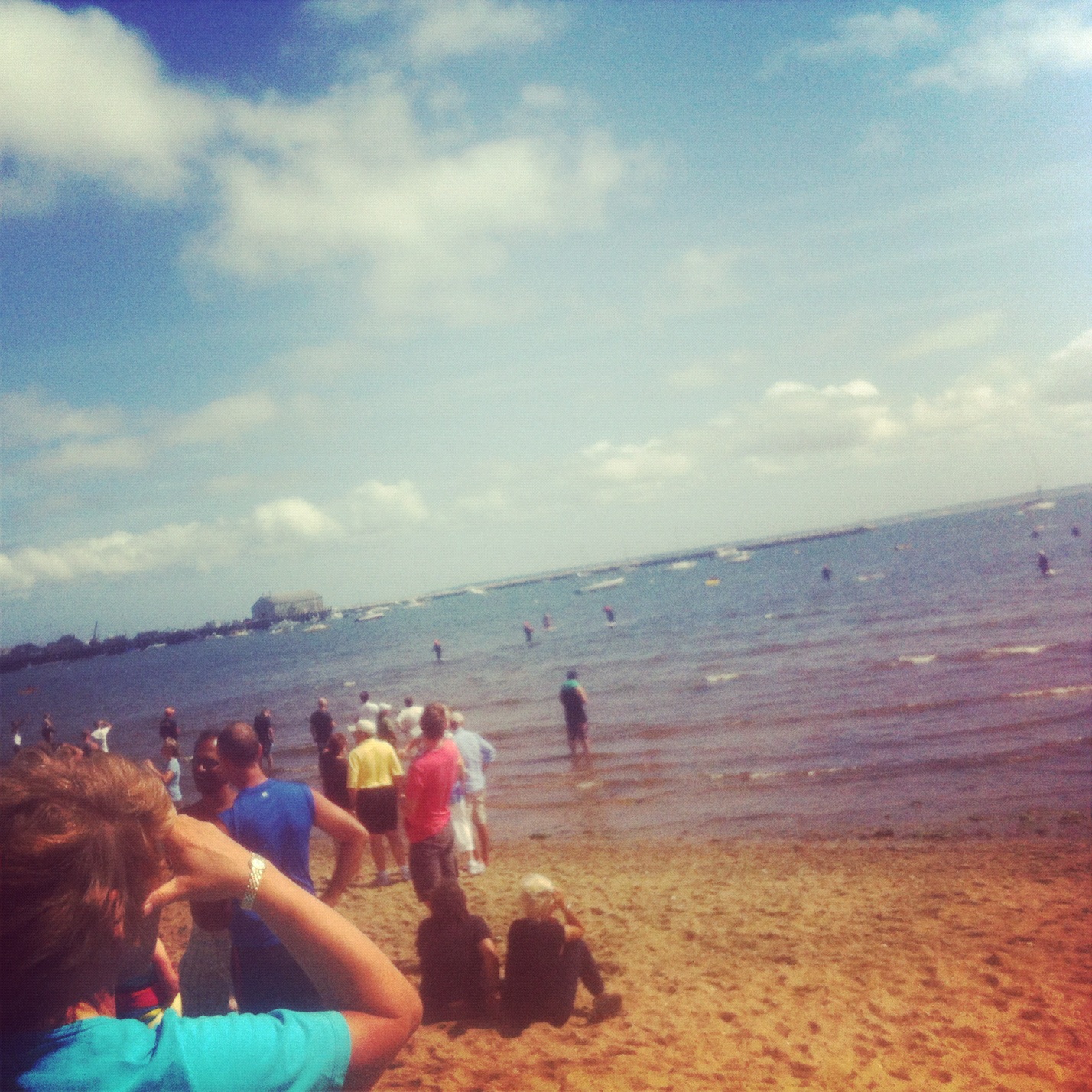
Swim for Life Provincetown 2012

The puppets stood silently, even Karagoz, in a still, smooth line – watching the swimmers come in from their long, cold swim into the safe harbor of the Bay. (Photo of Swim for Life, Provincetown, MA 2012 by Liz Cameron)

On the way, I explained what I knew of the history of this event to the puppets, who listened with wide eyes and open hearts as they heard more and more.  “This event has been going on for 25 years,” I explained carefully, “you can read about this history of this very moving event by looking at the website, but in short, it is a swim to raise money for AIDS, women’s health and the community here in Provincetown.” Realizing that they did not know what “AIDS” was, I explained to them that it was akin to the black plague they had lived through as members of the Ottoman court.

Whipping out his petite alligator-skin-covered iPad, Celebi the modernist puppet (who never ceases to chase down the latest technological gadget) quickly looked up the history of Provincetown’s event, and read to us from the website:

Prayer ribbons to commemorate the dead and celebrate the living - for 2012 Swim for Life in Provincetown, MAProvincetown is an historic fishing village, art colony, and gay and lesbian resort on the tip of Cape Cod, surrounded by the Cape Cod National Seashore. It has been devastated by the AIDS epidemic(“well,” Celebi said, “we know that already”) Provincetown Harbor is designated a “safe harbor” and is one of the largest natural harbors in the world. The Swim for Life is both a fundraising event and a celebration of this unique geological gift that gave birth to Provincetown and its symbiotic relationship to the sea. The activation of this water with human bodies navigating its magical essence, along with the neon-colored swim caps and kayaks, has become an important community tradition as we become more aware of the fragility of the natural environment and our place within it…(Swooning, Esma the hippie puppet sighed at the imagine of human bodies -navigating the magical essence of the bay).  The Swim for Life, which continues to celebrate the healing waters and ecology of the harbor, while raising money for local health services.”

Prayer ribbons to commemorate the dead and celebrate the living - for 2012 Swim for Life in Provincetown, MAWe continued on to the Boatslip a bit sobered, some of the little dancing ladies were weeping, but we were drawn on by the roar of cheers and huzzahs – the first swimmers were coming in.

Standing silently on the beach, ensconced in the glow of late summer sun and new friendship, I remembered how every single one of the hospital patients I had worked with on Metropolitan Hospital’s HIV/AIDS ward had died during my year there.

As I watched the looping arms come in to the safe harbor from the long, cold swim from the point, I tried to remember each face and name of the people I had worked with.  I remember Y. who looked so young and frail in her bed, her dark features highlighted in my mind by the blinking blue and red lights around her.  I used to think she didn’t deserve to be in such a dimly lit room – even though her smile and effort lit it up so.  I remember holding back tears while she squeezed my hand tight as she told her five year-old daughter of her impending death.  Those tears stayed inside until I could get in the elevator. The vision of Y, getting smaller and smaller each day in the bed haunted me for years, glowing blue and receding like a burning coal into a stack of newspapers consumed by deepening flame.

I conjured up a vision of C., who “lived” on the sunnier side of the hospital.  He was a Brazilian immigrant who I best remember for rushing to make a last Carnival costume.  “You are,” he said with a sprightly grin, “the perfect size of my niece.  You must model for me so I can finish it.”  Whipping out a partially-constructed costume made of not much more than elasticized gold sequins and green feathers, I had no option but to allow him to take measurements in the mid-day sun, much to the delight of all around.  He was making a costume to that niece for the annual event in Rio – he rushed to make it as he was losing his eyesight. He finished the costume – and died the next day.  I came back to an empty bed, the smell of disinfectant all around save for a couple of gold sequins behind the bed.

I remember T., who battled the racist and phobic nurses and nurses aides on the ward by bellowing out James Brown at the top of his lungs as long as his voice lasted – nobody would change his bedpans or remove his food trays as he was diagnosed with not only AIDS but also TB, MRSA and Hep C.  People were afraid to touch him – or even to walk in and talk to him.  The hospital made me don an Easter-yellow plastic body suit with a plastic protective helmet and shield in order to protect against contagion.  It was dehumanizing to wear – but just imagine how dehumanized he felt receiving his few visitors all of whom looked like that.  The stench in the room was oppressive and I had to work on not gagging constantly through my visits.  One day, I took a stack of soiled trays and bedpans out of the room myself, feeling the stupidity of my efforts to get people to move them when I wasn’t myself.  I plopped them down with a platic-hard-click on the nurses station.  That effort, while rooted in the benefits of shock value when attempting systems change, nearly landed me in jail.  The security team was there in seconds and I was in the administrators office in minutes.  It was a losing battle for me as a new social worker.  I never did get anyone to care for him right – although I took some comfort in knowing that perhaps he died knowing that at least my supervisor and I tried to do something, even though his last words to me were “fuck you, you’ll never get anywhere.”  He was right, and his pain blinded all at that point.  I ignored the curse.  There are times you can’t live with yourself in the face of futility, some might say it was a scream at the moon moment.  That weekend, T. died alone in his isolation room, surrounded by institutional plastic orifices piled high and stacked deep, replete with old food and feces.

P. was a different story altogether.  Although he had almost all of T’s diagnoses, he was treated very differently from T.  He popped out of my memory that day on the beach, right onto the front burner of my mental stove.  A former comedy show writer, his jokes and glib demeanor became all the more marked as he became sicker and sicker.  Encased in what can only truly and accurately be described as a full-body herpes canker sore – he was constantly in deep pain – but always forced his way through it by keeping everyone laughing.  His partner sat in the corner of the room making up for it all, crying.  I never saw him not crying.  P. and I spent much of our time singing a la Carmen Miranda.  Although I was assigned to him for “discharge planning,” there was, as he put it, no discharge but death.  He dictated his wishes to me and I wrote as fast as I could, as his partner wept.

And there were so many more.  And they all died while I was there.  And I have barely begun to process this, 15+ later I am just starting to.  I have not been back in the world of HIV/AIDS care and support for a long time, and in the early 1990s, most of the rhetoric around me was pretty negative. My father was so upset about the idea of me working on the ward, that he hung up the phone on me and didn’t speak to me for several weeks. The year was 1993. S

Back in 2012, standing on the Bay Beach watching the swimmers come in was a moving moment for the puppets, as they took stock of all they had to learn about the HIV/AIDS epidemic – and of all the energy, support and love around us – but most importantly, how far HIV/AIDS treatment has come since my year in Spanish Harlem.  Now, life is an option.

Posted in Turkish-American Matters, Visits from the Karagöz puppets | Tagged , , , , | 2 Comments

Karagöz wishes Yehuda Rebbe L’Shana Tova


Painting of a Jewish man from the Ottoman Empire.

Karagöz, my impish and oppositional puppet, is very serious today, and this, my friends, is an unusual event.

Karagöz, the little chorus of dancing ladies tell me, has decided to honor one of our sage puppet elders, Yehuda Rebbe, the Globalized Rabbi Wise Man, as it is Rosh Hashanah, one of the high holy days in Judaism.

Some of you may know that in the Talmud, it is indicated that 3 accounting books of a sort are brought forth on Rosh Hashanah, and as Wikipedia explains, “wherein the fate of the wicked, the righteous, and those of an intermediate class are recorded. The names of the righteous are immediately inscribed in the book of life, and they are sealed “to live.” The intermediate class are allowed a respite of ten days, until Yom Kippur, to reflect, repent and become righteous; the wicked are “blotted out of the book of the living forever.”

A shofar made from a ram's horn is traditional...

A shofar made from a ram’s horn is traditionally blown in observance of Rosh Hashanah, the beginning of the Jewish civic year. (Photo credit: Wikipedia)

“Why,” I asked, “has this day moved him so, is he trying to alter his space in the book?”

Looking around furtively, the little chorus of dancing ladies quickly flashed me a tiny drawing of an Ottoman empire man.  “This,” one of them whispered, “was the man who raised Karagöz after his father left him…he practiced the Jewish faith, and Karagöz honors him each year this way although his faith has taken him elsewhere.”

That Karagöz, he may be deeper than we all thought.

In case you are interested in the history of people of Jewish faith and their lives in Turkey, you can check out this website for more.

Posted in Cross-cultural learning moments, Visits from the Karagöz puppets | Tagged , , , , , | 2 Comments