 I am awake in dreamland. I have been having a lot of anxiety dreams at night. M. has had a few in Turkish as well, sometimes he sounds as though he is cajoling, sometimes yelling, sometimes begging, sometimes just talking and laughing, all I can understand is “ben” (I) and “falan filan” (yadda yadda). We keep waking eachother up with it all. I fall asleep eventually, usually practicing the sounds of Turkish letters over and over in order to at least not waste time spent wide awake. I know that I am really lying here, asleep in North America, but my mind takes me somewhere else as I just succumb to the dream. I am going somewhere with golden light. Is it the autumnal light of Bozcaada? Is it the Ottoman Empire era? Everything around me looks ancient and familiar yet unfamiliar. I am unsettled by the sheer presence of the space in this dream.
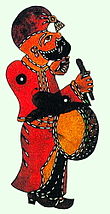
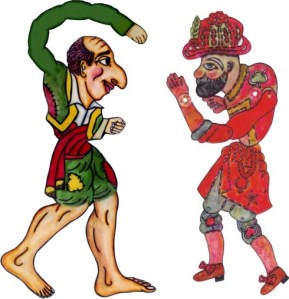
Hanging above me, I can see the illuminated faces of the lady shadow puppets, holding some sort of vigil around me. I am in their teacup or their cocoa bowl, if Ottomans drank cocoa, maybe this is a French interpretation of Ottoman lady shadow puppets. It is a dream after all. Their faces, all waxy and opaque, are strangely large in the fisheye lens of my dream at the periphery. Honey amber light surrounds me in my sleeping eye. I stop worrying about my surroundings.
 My pupils are focused in on the photo set of my dream. A stack of rich, opulent-feeling photos are placed neatly in a square, with equal spaces between them. I can see myself picking them up, putting them down in other places, shifting them from here to there. Somehow, I will “get this right.” My heart rate increases as I try to get just the right composition and I turn to myself and tell myself to wake myself up, to wake up M. next to me, to get the right advice on how to make a composition that is artful, graceful and functional.
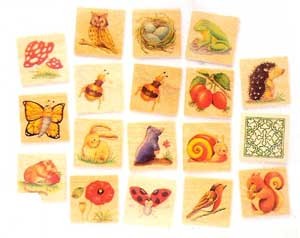 All of the images in the photos are ancient and golden. Sheafs of wheat from the fields, stacks of coins tied with red ribbons (ready to be pinned on a traditional Turkish bride), oilskin-punctured lanterns bereft at the swath of diamond shapes cut across them, slithering tawny tones of silk that undulates from bolts of fabric caught in a moment in time, light of the afternoon sun behind a minaret and then a familiar hand, the hand of a family member, the one I have been so upset about recently.
There is a photo of her hand and I can tell it is caught, mid-expression, in a moment of happiness and excited utterances. I can tell by the dusky light and greenish grey flashed images behind that it was a photo that is not ancient, and not Ottoman-focused, like the rest of the images, but rather modern, with a timeless quality. It is a photo that most people would think was a mistake, an enlarged image from an Instagram photo taken when the light was waning. I pick up the photo, intent on placing it in just the right place. I labor over this, for dream-hours. Just as I place it in the perfect spot in my memory board-like space before me, the door slams open and a breeze blows this one picture down and away not to be found again. The sense of dread shocks me taught and upright. The little chorus of dancing ladies circle around me, guiding my tense and stuck hand to the picture of lanterns. I pick it up and stare at it. I guess I am looking for a way into the picture. The longer I stare, the more I see through those diamond-shaped cutouts and soon, I catch a glimpse of that beloved hand once again, doing just fine, on some other side.
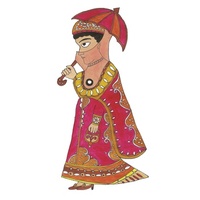 I wake up to the pitter patter of Hacivad crawling up the nighttable to place himself, lotus-like, on my left shoulder. As I wait for him to assume the position, I reflect that this is the oddest anxiety dream I have ever had. He whispers to me the following words: “Don’t grieve. Anything you lose comes round in another form. So says the Mevlana Celaleddin Rumi. You may have lost your trust in the care of your family member, but it will come back in good ways.”
Leave it to the shadow puppets to start communicating with me in dreams again, it has been a long time since they showed up in a boat, just before I left the States for Turkey for the first time. An insatiable yawn rising up, I thanked Hacivad and promptly drifted back to sleep.
Related articles
- Karagöz: Consider this a formal introduction to himself (slowly-by-slowly.com)
- Angry Karagözis: Debating the ideal limits of family caregiving (slowly-by-slowly.com)