 We are surrounded by the particularly Istanbul-style sprawl around the highway – gecekondu (shantytowns) turned formal. Every time we drive from the island house on Bozcaada back to the city, the city is bigger, there is just more of it. When I ask about the names of the places we pass on the highway, such as Mahmutbey or Başakşehir my boyfriend shakes his head “no, I have no idea what that place is known for, or who lives there, it’s all made up stuff, made up names it’s all new. I don’t know it or recognize it at all – it used to be green space…none of the tradition is left, all of my friends prefer Italian food to Turkish food, coca cola is everywhere, the old ways are gone…” He goes on and on like a tired Grandfather commenting on the much maligned latest generation who will surely sink us all.
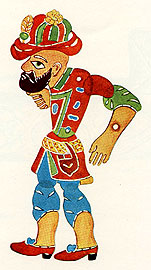
I feel his tension at the changes before him keenly, I feel as though he wants to shut his eyes and take a nap, but being the only one in the couple willing to brave the Turkish drivers out here, that’s not going to happen . I am especially careful not to show any sort of disrespect of his driving in such moments. Hacivad sits on the gear shift as this goes on. He is stroking his beard and doing a tennis-watching style left to right look as we talk. “Indeed,” he says very quietly, “all of this is very overwhelming for him – to see a city of 10 million turn to 17 since he has left the country just 15 years ago. This must be disconcerting. You are doing well to be quiet about the weaving in and out of traffic and the like. He is facing his future and past and wondering just where home is. My wife is cooking me a snack just now, but she has called over to say you are doing JUST the right thing that a good wife should do – which in this case is listen, empathize and shut the heck up. It is his mourning for home, you see, home is Istanbul whether he says it is or not.”
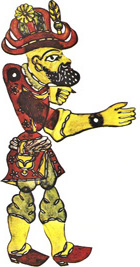
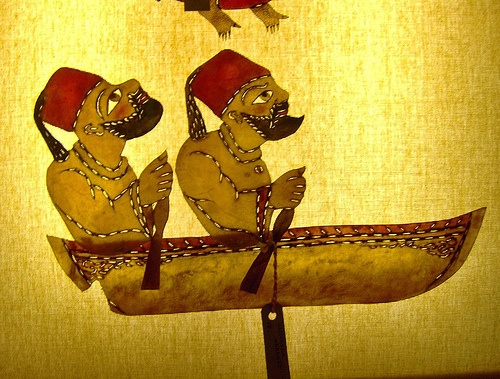
“Home, home, dome, is it Rome, no, it’s home!” Karagöz is vamping Hacivad as he swings wildly from the rental-car mirror, dotty and bright with headlamps of the cars that are impossibly tangled around us despite going full speed ahead. Looping his hands from here to there on the string of nazar boncugu (evil eye) beads that I have placed on the mirror to protect us, he is doing flips worthy of the Olympics, I think. “He’s a tender hearted farted, this Turkish boyfriend of yours, who cares if all of this is built up now? Why so maudlin-paudlin? I think you should start an argument about that last maneuver with the truck – that’ll get him out of his funk about this ‘where am I’ stuff.” Karagöz is on a cackling roll – and I shake my head to rid the image of him, but after his image wiggles a bit, it’s back to the jester and his looping swings. I hope he doesn’t break that string of beads all over the rental car.
Shooting him a sidelong “he is so immature, will he ever learn?” look, Hacivad continues. “Clearly, this is the lot of the expatriate,” he notes, “you don’t belong there, you don’t belong here.” It is the ultimate duality we learned of in Indian philosophy – the coexistence of two – in fact, if you refer to the Sufi poet…”
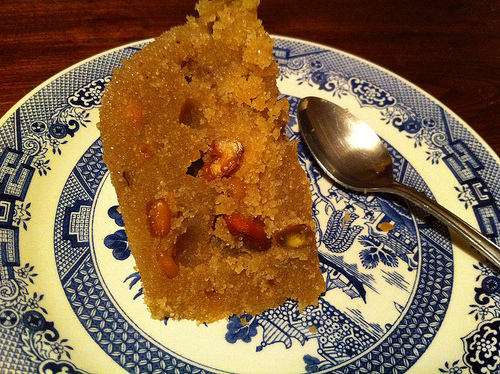
Karagöz interrupts the academic reflect ion by letting out a blood-curdling yodel as he repells himself down from the mirror in a series of airborne somersaults that cause him to lose his pointy, Ottoman-style shoes. “Indian, shmindian, duality, reality,” let’s stop for some lokma – did you see that man boiling up those things in an old oil barrel by the road? I know you American types, you call lokma beignets in New Orleans – you need to try this one, it has superior quality with rancid motor oil in the mix – that’ll really rattle him up – motor oil lokma! Woo-hoo! Too much bellyaching, I say, too much navel gazing, if you don’t like the Bosphorus, get back to the Charles River, eh?” Before I finish suggesting taking a vacation from the traffic with the side-of-the-road lokma vendor, my boyfriend tells me that his mother warned him not to drink pickle juice from the lahmacun vendor as a child, given it’s yellow quality, and suggests that highway lokma is not a good bet.

Turkish lokma - akin to beignets from New Orleans
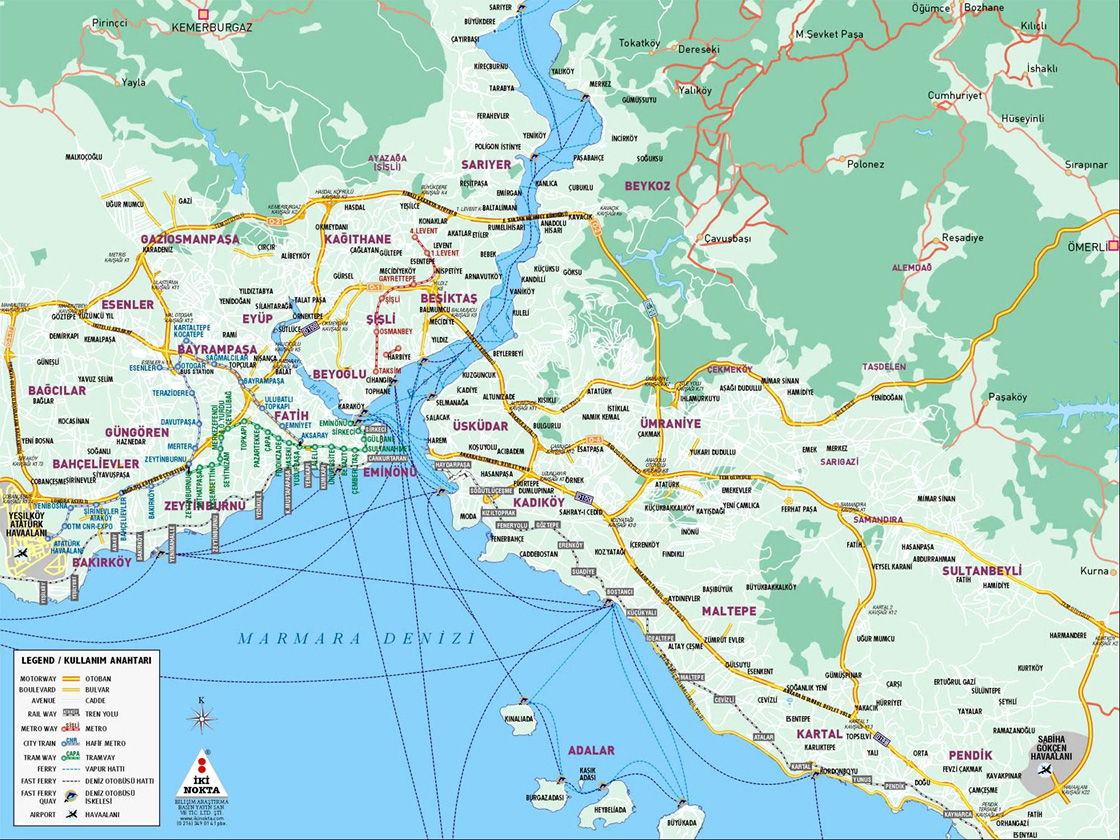
Before I can come up with a smart-alecky response for either my boyfriend or Karagöz, I note that we are stuck in impossible traffic, and it is stopped for miles. We have been in the car for almost 8 hours and are nowhere near the part of Istanbul we need to be in for the night. The trip usually takes 6 hours, my boyfriend tells me, before entreating me to turn on my navigation switch “because I can’t stay on this highway, I will lose my mind – we have to go through the city.” The joke in our relationship is that I have a built-in compass, and he was born and raised in a country where the concepts of North, South, East and West were not used for finding one’s way. While I have my doubts about the latter claim of his, I am game, and, of course, whip out my trusty map. We begin to navigate the back roads through the cement sprawl – it is about 10 p.m. but mangal (bbq) smoke is still wafting here and there from one person’s kebap and another’s köfte. “The one good thing about these areas,” my boyfriend says with a limp balloon’s amount of defeat, “is that they cook the old way.”
We spend the next two hours with me and the map – which I abandon at some point in favor of dead reckoning, and I do this navigating until we are in a place that he knows…I am glad to be able to step in and do something constructive and am feeling good about this teaming, even though I know my boyfriend is feeling defeated by his culture shock at re-entry. We will deal with this phenomenon each year upon our return, but I do not know this yet.
Karagöz is mimicking a Sufi dance – one hand to God, one hand to the earth as he twirls – but he is, as usual, exhibiting oodles of disrespect for this ancient ritual by screeching in circles about “culture shock, smell my sock, the Rolling Stones rock and you I mock.” I note that my latest read on the Turkish vernacular, or common speech, educated me on the tradition of rhyming words during a repetition – something that appears to have moved into English for these puppets who insist on accompanying me wherever I go now. I have grown to love them, despite their frustrating ways – as they embody my confusion at what I feel, do and see here in Turkey. I was learning to navigate anew – something I had thought I knew all about – and these puppets allowed me to see that a bit more clearly once I tuned into them.

Navigating by maps, the sun, the stars, and my gut is something I have always done, but doing this with a partner, in a new country, with different expectations, realities, approaches, beliefs, you name it, that was tough.
As we approach the family apartment, Hacivad places his hand respectfully on my leg in a fatherly way, saying “I am proud of you, American lady Liz, you navigate well – on the roads that is. And a bit, yes, on the relationships too, but this needs work – and you MUST stop interrupting, but that is for another day.” Looking at me quizzically, Hacivad asks “how is it, then, that you learned how to navigate so well? And why would you choose to navigate across cultures?”
A small group of Hacivad’s young students creates a circle around him on the gearshift and in the beverage holders as I tell him my story, which goes like this. “Well, Hacivad,” I tell him, “As I grew up, I learned about navigating my immediate surroundings with a compass that my father gifted me with at age eight along with a radio. He used to set me free in the woods – with my sister in tow – and tell me to find my way home using my compass and my wits. It wasn’t until years later that I knew he was nearby, tracking our every move very quietly behind the trees. I was never too nervous in these moments – I loved navigating, and creating a mental map in my mind of where I was. I always made it home pretty much lickety split.”
Mouths agape, students and teacher alike are flabbergasted. “What type of father is that,” Hacivad asks with significant alarm, “to leave his girls in the WOODS even if behind a tree? Horrors!” After a lot of cluck-clucking and tut-tutting, he reminds me of his second question, about why I chose to do navigation across cultures.
“Well, Hacivad, navigating is what I do – but not always on roads…” Taking a deep breath to explain it all, I note that Karagöz has exhausted himself and is taking a nap. “Well, now that he is asleep, let me tell you about it. While I became an adept at navigating the justice system and its many cultures as a social worker in New York City, I started out my life navigating the ways of my own diverse familial cultures came from early on.” Karagöz sniffs – “you aren’t really saying much there, missy-moosey.”
“OK, here is some more detail – I was raised by a first-generation European immigrant with Spanish and Scottish parents and a fifteenth-generation New England Yankee with a Canadian mother who had married in, the need to navigate cultures was constant but quite expected and unspoken. Navigating difference was nothing unfamiliar to me, but was often difficult to explain to my schoolmates, who did not understand the somewhat antiquated traditions across all elements of my family, such as not having a TV, always wearing a skirt, not blow-drying my hair and having all of my clothes made for me – and forget about the old bowl haircut. My family was positively, definitely, not normal. Of this I was sure and while often embarrassed by this difference, I embraced it nonetheless.
The crowd of Hacivad’s students murmurs approval – they can clearly relate, one is nodding off. It is late, almost midnight now. Hacivad is rapt at attention.
“Part of embracing my own difference was about learning to navigate the wider world through books and maps related to those books. My mother taught me to interpret road maps from an early age from the back seat of her car – encouraging me to be curious and embrace the notion of travel to far away places she, as a woman with severe diabetes and two young children, one with a major disability, could not venture. In addition to dreaming about a journey on the Trans-Siberian railroad, spurred on by Nabokov’s Speak Memory, she spoke of wanting to return to her mother’s home in Spain, her father’s home in Scotland – and a place called Gallipoli where an uncle she had never met had died in a war. Navigating maps accompanied all of our nightly reading sessions, be it a real map (of Chile, for example, to narrate Neruda’s realities) or imagined of Middle Earth (during Tolkein’s trilogy), Narnia (during the C.S. Lewis series now a movie), Moominland (Tove Jansson) or the Doldrums (Jules Feiffer).”
“We need to know those books,” cries the crowd of students – waking up the one laggard, “they are not yet in Turkish, and we bet our English is too spotty just yet.” Hacivad reprimands them for thinking their English is poor, and turns back to me out of respect.
“But the navigating I have always liked the most gets back to maps. Being part of a family of immigrants on my mother’s side, Europe never felt far from our collective psyche. Maps covered my Granny’s house on Cape Cod, where I spent much of each summer. Most of those maps detailed the roads and bridges of far-away places in Europe, but there were three that captured my imagination.

First, there was the map of Spain, my Granny’s birthplace, for which she clearly pined. Granny had emigrated from Spain to New York City with her infant son in 1921 to join her husband. They had married two years prior in Paris, while he was on leave from the trenches of World War I. She had, I later ascertained, returned to Spain pregnant with her first son. I loved to hear her tell the story of her wedding in Paris after a long boat journey from Southern Spain while perusing the faded map under her hands. It wasn’t until many years later that I noticed markings, in faded pencil, showing the start of her journey from Spain to Paris and the year – Paris did not figure on the map, but the direction north did. There was also an arrow towards “the new world,” as she still called it, from Spain in 1921. She grounded herself in this map even years later while stuck stateside for life. Lovingly framed in delicately carved wood with floral scrolls at the edges, I could see the path of her finger across the map through the dust on the glass. This desert snail’s trail highlighted the drive from the southeastern city of Murcia to the smaller town of Aguilas, where her father ran an esparto grass plantation – from which suitcase paper was made. This man, I knew, loved to travel and had mastered the international language known as Esperanto. I knew this because there was a map of Europe with an Esperanto introduction hanging in the kitchen which seemed fitting, given the often globalized content cooked therein.”
“Aha – so you are a sister of sorts,” Hacivad notes, “you have some sort of Mediterranean blood, and thus you have found this Turk here. It all becomes clear.”
“Well,” I say, not wanting to get into it, “yeah maybe – but let me tell you about the second map, it was framed more conservatively was a map from the 1920s picturing England, Scotland and Wales. Ireland was excluded. The ebony black frame was smooth and simple in the strong plastic that came with the 1950s, but no roads were drawn lovingly through the dust here. My grandparents were first cousins, both having hailed from Scotland, but my Granny always wished to attain the “better status” of being from England and only tolerated the legions of Scottish paraphernalia around the house – thistle-carved crystal glasses for whisky, a poster of Robert Burns’ birthplace and tartan blankets abounding. While Granny had never but visited the ancestral home of her family in Scotland, Grandpa had never known any other place before fleeing to America as a teenager from Glasgow, having no “opportunity” it was explained to me by my mother. I knew that he had struck out for a better life given his status as an orphan and his unwillingness to join his brother’s family in Southern Spain. None of this was relayed in the map of these three countries – nor was the care and attention of the map of Spain evident in the location of this map in the back hall, upstairs, near my mother’s room.”
“Aha!” says Karagöz, “favoritism, she was bus-ted!” He is writhing around the beverage holder now, trying to fill it with fizzy water to make a little sauna for himself. I clean up the mess, and place him squarely in front of me, on the dashboard.
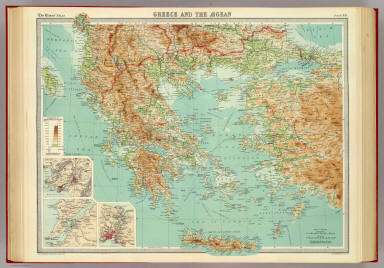
- Map of the Aegean Sea
Forcing my eyes into his, I don’t even comment on the sauna incident, instead continuing my reflection. “There was a third framed map, however, which received very special yet mournful attention. It sat in a carefully polished silver frame inside a hand-sewn flannel pocket designed to limit the need for polishing. It did not adorn the wall, instead, it laid rest inside my grandmother’s writing desk on its side, along with a photo of her dead brother Allan, my great Uncle, in a military uniform. The map of western Turkey in my Granny’s mahogany desk was from about 1930 – and someone had highlighted the Dardanelles Strait in a great, silvery pencil oval. It was a very deliberate, and slow marking. The Dardanelles, as these waters are often referred to as you know, Karagöz, consist of a body of water known for separating the European and Asian sides of Turkey – but most importantly for containing the Gelibolu Peninsula – where the fated Gallipoli Battles were situated.
You know, I couldn’t understand the loving care afforded this secret map – I only knew it was there from sneaking into her writing desk while she rested during the afternoons – I was after her calligraphy pens. I didn’t know what a Dardanelle was, and couldn’t imagine why my granny was so interested in this seemingly arcane spot on the globe. Many years later, I had learned that my great uncle had died here, having been raised in Spain, schooled in Scotland and enlisted in the army upon seeking his fortune in Australia soon to die on the steep, straw-grass hills of the Aegean Turkish coast that have achieved such fame.”
We are pulling into the garage, and I notice that I have just about lost everyone – the students are all asleep. Karagöz is resting on the DRIVE 4 side of the gear shift while Hacivad is on the PARK side, which I find to be an apt metaphor for their personality types – one a jester, one a thoughtful if not somewhat obnoxiously plodding teacher. They are sharing a hookah now, I think it has the rose-scented tobacco, but it is hard to tell when you are dealing with Karagöz puppet smoke. They are on to bigger and better things. They got me to think and reflect on what I needed to think and reflect about, and now they need a break.
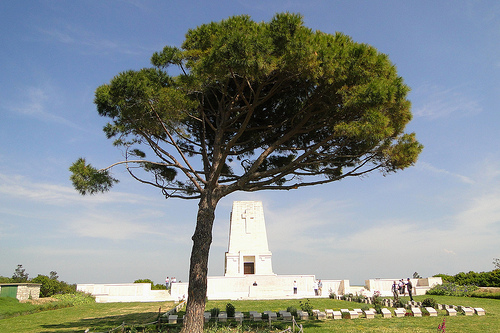
I think back to our time at Gallipoli earlier today (see yesterday’s blog post) and wonder at the map in my Granny’s desk and the fact that I stood in the place of that map today with my boyfriend looking down at the Dardanelles, framing a new visual map in a floating silver frame. Standing on that impossibly hot and steep summer hill, we touched hands without looking at each other, as if our relationship was foretold by my Granny’s mournful map, and indeed, I believe it was. There are no puppets around to comment, it’s just me, my boyfriend and history falling heavy around us in the Istanbul night.