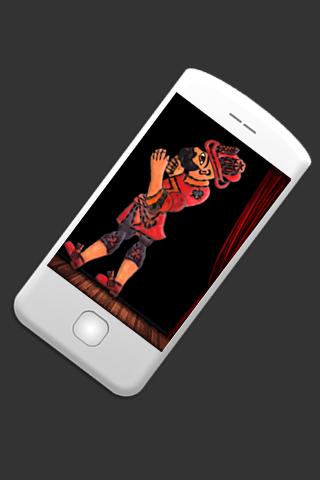
Kenne, the Queen of manners, spearheaded the naming effort the second I finished my çay. She is, you see, very interested in everything having its place and/or its name. “Now you need to spend the day reading this book, M’lady,” Kenne began, “because it talks about cross-cultural couples, and this lady, Wendy Williams, who wrote the book, she is in a cross-cultural marriage – but most importantly, you see, she interviewed lots of what she calls “glo-lo” couples to talk about the joys and challenges they face as a result of being part of a cross-cultural couple. And she summarizes it all.”
At this moment, the puppets, who had rigged up a complicated mechanism over the bed to drop Ms. Williams’ book into my hands for a read let their masterpiece fly – and the book dropped, picture-perfect, into my hands. Complying with the puppet troupe’s demand to engage in a readathon, I read until I learned that “Glo-lo” is shorthand for the globalizationof love. This is a new term coined, as far as I can tell, by the new author, Wendy Williams, who has written the book pictured to the left. “OK, puppets, I see, In many ways, this blog I keep is, well, a “glo-lo” blog. So, I guess you could call us a glo-lo couple, but let me see what I think about this book.”

Later in the day, I read the rest of the book, and the puppets even left me alone for the whole time I was reading as they seemed to intuit that this was an important issue to read about here in this globalization-infused home (for better and for worse). As Ms. Williams puts it “…one of the most profound effects on globalisation is that people from everywhere are falling in love with people from everywhere else. There is a world of romance happening out there and it is called the globalisation of love.” Indeed, she has a point.
And while this point has been made in academic circles in a much more scholarly manner, such as in the book Love and Globalization: Transformations of Intimacy in the Contemporary World, what Ms. Williams does in her book is not intended to be scholarly – but is in the “lighter reading” category. While I don’t agree with all of her characterizations and wish that she didn’t employ a heterosexually-focused analysis of glo-lo couples, I really appreciated the fact that she does address some often not-discussed and even taboo topics – the mother-in-law, the challenge of language barriers/confusions, sex (briefly) and religion. While this is not a book I would normally pick up, as it is more of a self-helpish kind of book, it has stuck with me in more ways that I imagined, in the form of initiating interesting and important reflection and conversation with my partner, M. So, I thank Ms. Williams for that. Wendy Williams’ new book, The Globalization of Love, came out earlier this year thanks to Jo Parfitt’s Summertime Publishing.
So, why talk about this glo-lo stuff here in slowly-by-slowly the blog? Well, I have been thinking a lot about the power of stories lately – and of course, this blog is all about stories from the cross-cultural road trip that is my relationship. And, what Ms. Williams does best, perhaps, is collect stories from a range of “glo-lo” couples. So far, I have written about Rumi on stories and from Elif Şafak on writing, about the power of childhood stories on becoming an adult writer– and have reflected some on the power of soldiers’ storytelling…but today we are moving on to something else altogether.

Given our current story theme here at Slowly-by-Slowly – let me talk about what spurred on the ongoing, interwoven and mighty mad stories that make up this blog’s raison d’etre. As M. likes to say in front of a crowd, “if it weren’t for me, there would be no blog.” Of course, this is true, but I cherish him for eons more than that. But it isn’t just my partner that spurred this on – it is the imperceptible in-between of being partners when each part comes from a different place, a different space – a different worldview – or culture.
Also, so much of the writing out there addresses relationships/marriages/partnerships involving differences in stark and stolid terms – it gets clunky, filled with stereotypes and black-and-white characterizations – usually all good or all bad. The movie “Not Without My Daughter,” for example, in which a woman marries an Iranian man, things go wrong, and has the option of divorce and leaving Iran without her daughter – well, this movie has dogged me in how perceive my relationship – without knowing anything about me, M. or Turkey, for that matter. I felt the need to add a different voice to the world, in the form of my blog, and maybe, just maybe, a book….someday. So, once again, thanks to Ms. Williams for her work on drawing light to a relatively new issue in need of much consideration!
The following are excerpts from an interesting interview with Wendy, who I have not yet had the opportunity to meet, in which she talks about her new book – and about the globalization of love. Thanks to Jo Parfitt for her permission to re-publish parts of this interview.
JP: Tell me about your book. What is it about? Can you describe it in just a few sentences?
WW: The Globalisation of Love is about the whirls and twirls, the quirks and perks, the frustrations and the fun of a multicultural relationship. The book is based on dozens of interviews with multicultural couples from around the world. It includes chapters on multicultural weddings, religion, race, food, language and children. It is both humorous and factual and I include personal anecdotes from my own experience in a multicultural family. There is a world of romance happening out there and it is all captured in The Globalisation of Love.
JP: Why did you write it?
WW: Three reasons. Firstly, globalisation has been the buzz word of the past 20 years, yet little attention is given to the most profound influence of globalisation, which is the effect it has on people. People from everywhere are falling in love with people from everywhere else. Secondly, multiculturalism is another term that is bandied about to describe some kind of pesky nuisance to society, yet multicultural couples and families are constantly increasing and becoming a social norm. Thirdly, multicultural couples, what I call GloLo couples, get a lot of negative attention, like they are all destined to fail. In fact, most GloLo couples describe their multicultural relationship and experience as enlightening, enriching and the most amazing journey to take through matrimonial life.
JP: What qualifies you to write this book?
WW: I grew up in a multicultural family – a British-Ukrainian-Canadian family. I have been married to an Austrian for 13 years and have been living and working internationally for 18 years. What really qualifies me to write the book however, is the ability to see humour in the challenges of a GloLo relationship.
JP: Why do you think your book needed to be written? What will it do for other people? How will it help? Did you have any competition?
WW: It needed to be written for two main reasons. Firstly, it is important to recognise that a multicultural relationship is inherently different than a monocultural relationship. Multicultural couples have all the issues that exist in monocultural relationships, as well as whatever colourful combination of culture, language, religion and ethnicity the couple bring into their marriage. Secondly, the book outlines the issues in a multicultural marriage, so it helps GloLo couples to identify hot spots in the relationship that are culturally based. I wanted other GloLo couples to know that they are not alone and that there is a funny side to a GloLo marriage.
Yes, there is competition. There are many wonderful books about multicultural dating and marriage however The Globalisation of Love is the first book that is deliberately written with humour and wit.
JP: Who do you think will read your book? What made you think that there was a market for it? If your book has been out for a while, what proof do you have that you were right?
WW: Multicultural GloLo couples, and their friends and family will be interested in and benefit from reading The Globalisation of Love. Almost every knows someone or is related to someone in a GloLo relationship, therefore the book has a broad appeal. It is a topic that is starting to receive more media attention on multicultural royal weddings and GloLo celebrities, so it is becoming very chic to have an international marriage.
JP: Now you have written this book, what has writing it done for you, your family, your self-esteem or your business?
WW: The most noticeable difference for me and my family is that since I finished writing the book, I now take weekends off!
JP: If you were to give advice to someone else who is thinking about writing a book, what would be your number one tip?
WW: Write about something that you are passionate about and like to talk about or read about all day long.
JP: And finally, how can people buy your book, in what formats, and what does it cost? Please include any links if you have them.
WW: The Globalisation of Love is available on Amazon and via www.expatbookshop.com for €19,99. An ebook will be available soon too.