
Quality time with bikinis, books and the dancing ladies in Bodrum


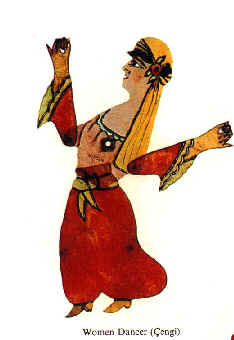
One of the dancing girls in the shadow puppet troupe inhabiting my purse

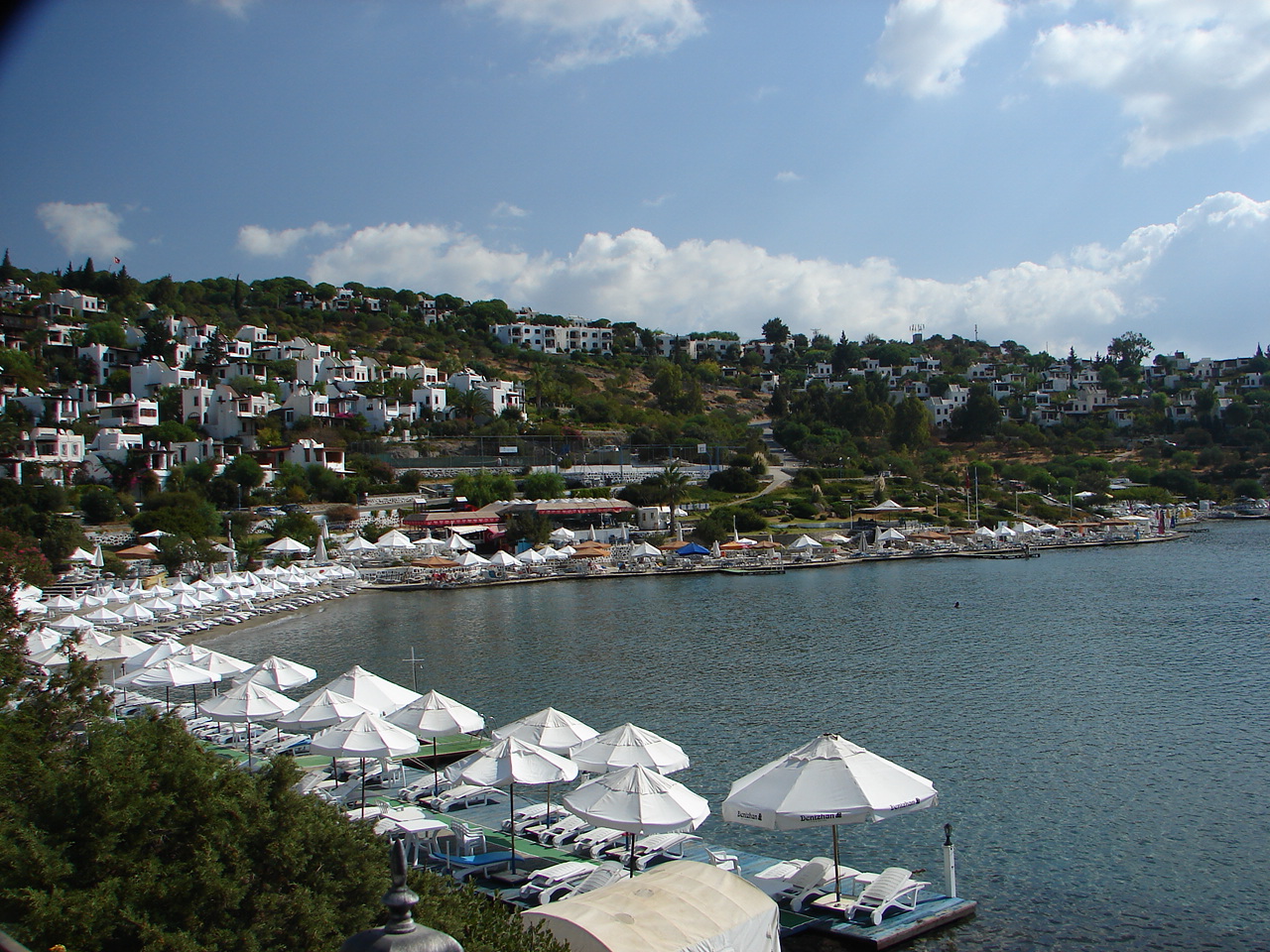
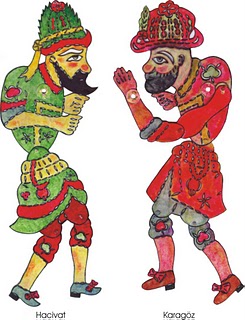
The year is 2004.  The day is indiscernible between sunshine, jet-lag, enjoying a visit with my boyfriend’s family and on-again, off-again culture shock.  It is mid-afternoon, and I am tanning and reading just steps from the Aegean in a gated community near Bodrum, Turkey.  We arrived here near Bodrum after a twelve-hour car journey through Anatolia, my brother-in-law at the wheel the whole time.  It was a fascinating drive, and I got to know my boyfriend’s brother much better on the way.  As the comfortable BMW wound its way through the hills and down towards Bodrum, great swaths of white chalk-looking cottages dotted the hills all over.  The sun was setting, which added a honeyed glow to the landscape, already quite dry and arid looking from afar.  The Aegean soared out in a horizontal gesture, clear and blue with an aqua tinge…I hadn’t heard from Karagöz, Hacivad or any of the others in the shadow puppet troupe since my Bursa lunch, so I just focused my attention on seeing what would come next.

Gated beach community near Bodrum

It took me a few days to get used to the machine-gun wielding guards that traverse the perimeter of the place on a half-hourly basis.  I have met a few of the judges and military officials that live here, which I think explains the presence of the hard core security.  All were very pleasant and have greeted me in English despite my attempts to use my new Turkish greetings and general niceties.  Most of our days were spent by the water in a cement-dock-beach with reclining chairs and tea service.  My main challenge in meeting the people around the community was how to engage in shaking hands while simultaneously trying to keep my cotton cloth wrap around me, unlike my svelte sister-in-law who parades about in her bikini.  I feel like the modest one, the unfashionable Yankee who is a little pudgy.  It is not what I expected, that’s for sure, and I feel a bit dumb about expecting that people would dress, now reality is sinking in, and I am shocked at how wrong my guidebooks are, at least about this type of Turkish community.

Hot wax for beauty torture

I have already realized that having only ONE bathing suit is not going to cut it.  I must have *at least* two, I am told by my sister-in-law, one for the morning, one for the afternoon.  I always just washed mine at lunch at home, and dried it in the sun before returning to the beach in Cape Cod, Massachusetts.  This explanation does not cut it with my sister in law, who let me know where I could buy other suits in Bodrum town when we went to the beauty salon one day.  I emerged with a new haircut, and otherwise pretty much hairless, in pain and somewhat in the throes of post-traumatic stress disorder over an intensive waxing experience nothing like anything I had ever endured before.  I think it was better that the aestheticians spoke no English, as I really did not know when the pain was about to radiate after their lightening-quick wax strip removal gestures were but a motion memory.  The chorus of dancing ladies I first met in Bursa did make one appearance during that time – they called out to me from the purse in which they have enjoyed residing, saying “we all have to do it, this waxing, ‘close your eyes and think of England,’ isn’t that what they say in your part of the world?”

Although happy to hear the compliments from my boyfriend’s family upon returning from the salon, it was clear that major improvements had been made despite the fact that my hair was still salt-and-pepper, much to their dismay.  I didn’t know quite how to think about that nor did I know how to handle my boyfriend, who rolled his eyes at all this, encouraging me to “just be yourself, i don’t care about all of this.”  I desperately wanted to fit in with the family and feel comfortable, but this was a losing battle.  There was a massive disconnect between the “real sized and shaped” women outside of the gates – and inside of the gates of that community – if you don’t count the hired help.  It was gruelling for someone as body-conscious as I am.

Body type of most of the ladies in the gated community

Clearly, my insecurities are running wild, despite my boyfriend’s almost constant efforts to remind me that he likes me as-is, etc.  The chorus of lady dancers have been calling out to me from my purse – telling me “be proud of your curves – look at all of us belly dancers” and “this new generation of Turkish women, no idea what the skinny movement is all about.”  It has helped some, but not much.   Karagöz has, as usual, been whipping things up into a frenzy in my mind, saying things like “she thinks you are fat, just sit on her hat, send her a rat if you don’t like that!” and “work it girl, waddle around here just as you are, pudgy and proud!  You’re here, you’re queer (to them) and they can get used to it!”  Hacivad, on the other hand, just keeps quoting Rumi to me, specifically this phrase “Let yourself be silently drawn by the stronger pull of what you really love.”  I have succumbed to insecurity for the moment, and have tuned Hacivad out of my mind some in my efforts to fit in.  My brother in law tells me that I will tan soon in an effort to be kind.

So, here I am, in richy-rich land, surrounded by gorgeous, petite, skinny and tanned Turkish women, doing what I can to feel confident in my almost six-feet tall, pale, somewhat-overweight-but-not-too-much-I-think body. I am reading a fascinating political history of modern Turkey and try to lose myself in the details and the pronunciation of words to the best of my ability.  Ever the earnest academic, I try to make conversation with my boyfriend’s family about Turkish politics, but this appears to fall flat each time, so I save my questions and observations for late night check-ins with my boyfriend and opt for learning about the latest Istanbul gossip, fashion trends and family intrigue from my sister-in-law, with whom I spend time strolling around the nature trails around the compound in the early evening.

Trying to suss me out for sure, my sister-in-law peppers me with questions that I try to answer to the best of my ability.  “Yes, I was married before, but divorced, yes, the divorce is final.” “No, not all Americans eat two hamburgers for dinner.”  “No, I don’t condone the amounts of obesity in the U.S., and no, I am not considered obese there – I could stand to lose a few pounds, though.”  “Yes, I was raised in a Christian church, but I have no problem with Islam.” “Yes, I know that (my boyfriend) does not want to have children because of his zero population growth beliefs” and “well, actually, I like my salt and pepper hair just as it is, but thanks for the suggestion!”  I am assisted in response-crafting pretty much constantly by the silent troupe of dancing ladies who jump into my pocket or hang off of my earrings if I don’t bring my purse along for a walk.  “We are your stand-in girlfriends,” they chorus, “until you get more comfortable around here. We’ll help you strategize your answers and remind you not to eat too much food around the family.”  Although I find some of their comments antiquated and unhelpful, I am grateful for their perspectives – and just for their presence during a confusing time where I feel as though I am “trying on” this new family’s lifestyle, so different from what I know of my boyfriend back home. My boyfriend is understandably wanting to catch up with his brother…so I am trying to give him space.  Between bikini shopping, salon visits, books and the dancing ladies narrating my every ethnographic observation, two weeks fly by without too much incident.  Karagöz and Hacivad sleep most of the time, letting the chorus take the lead as I try to figure out the navigation of bikinis, body hair, books and body image.

Posted in Cross-cultural learning moments, Visits from the Karagöz puppets | Tagged , , , , , , , , | 4 Comments

An interlude in Bursa for Iskander kebap: When the Karagöz puppet troupe stated their intentions


So, just how did I come to be inhabited by these Karagöz puppet characters, anyway?  I am not sure, but I do know that they chose me.  They first began to appear in my dreams, then on the airplane as tiny people and then, one day in Bursa, I learned their intentions.

At the start of their fairy tales, the Turks usually say bir varmış bir yokmuş (“it supposedly happened, but we are not sure if it is a myth,”) and this is akin to “once upon a time.”  So, bir varmış bir yokmuş, I first learned of the intent of Karagöz, Hacivad and their troupe while digesting an İskender Döner Kebap by the side of a busy street in Bursa.  I was feeling particularly culture-shocked that day after listening to Ladino speakers on the ferry to Yalova and missing my family and seeing how many women were veiled in Bursa – known to be a fairly conservative city in this regard.  I was being driven to Bodrum by my boyfriend and his brother in June of 2004 when both insisted on breaking the low-cholesterol diets of middle aged men for a massive influx of meat.

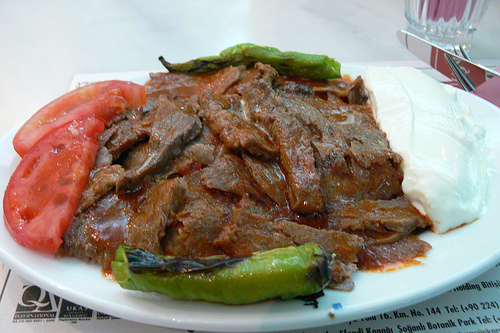
I knew we were stopping for lunch, but could not distinguish between the car stopping on a tiny side street, a plain-clothed valet opening my door and being deposited at an outdoor table lickety-split as the car was zoomed off to be held around the corner.  It really felt like a tire-changing moment at the Indy 500.  Before the dust could settle, I was sitting on a wooden stool across from the brothers, with a platter of roasted meat, garlicky yogurt and buttered flatbread before me.  The roasted peppers and tomatoes smiled at me from the side of the plate.

Iskander Kebap

After demolishing their plates and ordering seconds, which I declined, I was still working on what my Granny always advised me in new food situations “work on looking like a lady – don’t eat fast, don’t shovel it down, don’t eat too much.”  Her voice had been ringing through my head for days as I tried to be a bit more refined than I usually was – the days of ribald talk and cursing with the prosecutors in the Bronx criminal courts were gone.  Cursing, you see, was a way of life in which ribald talk was the lexicon there. Having met my gracious, slender and welcoming sister-in-law, I had been doing my best to play a part I wasn’t sure I wanted to play, but felt I needed to play.  So, I demolished my plate too, just in a bit more time.

Maybe it was the cholesterol-induced coma that I was in, but this is when Karagöz and Hacivad visited me that day – or more like jumped onto my tea glass saucer while I stared, somewhat dizzy-eyed at all the goings on around me.  Eager to catch up after a  year apart, the brothers were bantering on and on in Turkish – after much generous time spent with me in English.  I busied myself with my surroundings of the cobble-stoned street that seemed devoted to the provision of tables for this famous kebap palace.  Sipping on my ayran, a salty yogurt drink akin to a lassi in Indian cuisine, I noticed a billboard across the street that depicted a dyad of shadow puppets.  “hmmm,” I thought quizzically, trying not to burp, “what in the heck are Indonesian shadow puppets doing here in Bursa? They look an awful lot like these dreams and daydreams of mine”

Before I could file the thought away in my brain, I heard a cacophonous screech and a massive, plasticky-papery rip – and with horror realized that the characters on the billboard had turned to face me while releasing a torrent of what I can only imagine to be Turkish curses.  Slowly they extricated themselves from the billboard like self-possessed paper dolls in a perforated page in a child’s book.  Once free, they stretched their waxy arms and legs, worked out the cricks in their necks and jumped down on to the table – morphing into their mini-selves as they landed in my tea saucer.

Looking left, looking right, I realized that nobody else was seeing this.  I feared for my sanity and wracked my brain for memory of the DSM-IV and whether there was a culture shock-induced psychosis, whether this could explain what was happening.  Maybe I was asleep, I thought.  “We are NOT Indonesian!”  the one with the big black googly eye proclaimed with certainty.  Crossing his arms and moving his neck into an angular repose, the other, more studious looking fellow had his say with “welcome to Bursa, madame, we are born and bred here, to be sure, not in the wild climes of the South seas.”

“Why are you talking to me here,” I asked, a bit panicked. The learned one responded, “we think you need us right now, you need some explaining to get through this experience.”  The googly-eyed one piped in “let ME do the explaining, or he will mess it up,” to which the scholarly gentleman responded “actually, it is vice versa.  We are part of a large troupe of puppets that only inhabit the people who will listen, as you listened to Mary Poppins as a child, and believed with all your heart that the twins in that story really could communicate with the sun when they were young, in their own language.  It’s time to drive, we’ll be nearby! Look, the bottom line is, as Karagöz is telling you, you are having a great time – but as I am telling you – you need to keep on minding your ps and qs as a true lady.  Just let the brothers talk, just watch, learn and listen.”  The puppets went on and on with their interpretation of the day’s events.

Snapping to attention after a time, I realized the brothers had plowed through their second plate and were calling for the car.  “You don’t want to use the bathroom here,” my boyfriend said, apologetically, “it’s really only suitable for men, meaning, it’s nasty.  But the waiters have arranged for you to use their mother’s bathroom, upstairs, if you like.” Jumping at the chance to see a “real” Turkish household beyond my potential brother-in-law’s home, something I cringe about today as this felt like all-too eager and naive attempt at cultural learning, I ambled along behind a young man who delivered me to an empty apartment, neat as a pin, spic and span despite the oodles of exhaust fumes and dust all around us.

As I washed my hands, I heard two tiny voices from my purse. “Is that you, again, billboard men?” I asked, meekly, hoping that nobody would think I was crazy.  “No, we are women too, a troupe of dancers, we just want to say, you are doing fine, but you might need some henna in that hair, look at all that grey.”  Turning my head to the left and right in the buttery light of the bathroom, I considered my salt and pepper.  “I like my hair as it is, and so does my boyfriend, I am not sure I am really interested in henna, but thank you very much for the suggestion.”  With a collective sigh, and a “she’ll learn,” I heard them fold up into themselves and retire just as I heard the scholarly man bid me well on my journey, saying “it’s time to go, we’ll see you soon. Get back to the car, now, and as the Mevlana Rumi says, ‘rise up nimbly and go on your strange journey.”

Mustafakemalpaşa tatlı

Buoyed a bit by my new friends, with or without their advice, I skipped down the stips as nimbly as I could, newly open to the strange journey to follow.  As we wound our way across western Anatolia towards Bodrum that day, stopping for mustafakemalpaşa tatlı (a syrupy sweet treat akin to the Indian gulab jamun named after Mustafa Kemal Ataturk) and kilos of sour cherries, I made sure to watch, learn and listen, but I had no more visits for a few days….

Posted in Cross-cultural learning moments, Introducing the Karagöz puppets, Karagöz puppets in dreamland, On writing about my life with the Karagöz puppets, Visits from the Karagöz puppets | Tagged , , , , , , , , , , , , , , , | 8 Comments

Stirring the pot: Hacivad quotes Rumi, Karagöz fills me in on “Turkish love rats”


Mevlana Celaleddin Rumi - the Sufi Poet and wise man (vs. Karagöz the wiseass)

It is four in the morning. Hacivad jumped on my shoulder as I snuck out of the bedroom in my now-famous demure, white cotton nightgown to take a breather on the patio. I can’t stop thinking about the postings from American ladies who were engaged or married to Turkish men (see yesterday’s post, here).

Speaking to nobody in particular, I mutter “I don’t see any of these negative traits in my boyfriend – maybe they will emerge? Our conflicts seem to be more about communication styles and etiquette differences, certainly not about religion or family. Should I worry about whether he will become domineering? Whether his family will suddenly step in with expectations I cannot imagine now? Will things change if we have children?” I stare at the moon, a détente of sorts sets in. Me, the moon. Time ticks. The moon, me. Time ticks.

Moonlight on the Aegean

There is a tapping at my left ear – and I remember that Hacivad has taken up residency there. With mysticism swirling about his tiny voice in this early morning hour, he proclaims with a serene-ness only reserved for people who meditate “The great Mevlana Rumi says ‘The breeze at dawn has secrets to tell you; Don’t go back to sleep.’ and I think you should listen to him…but not the way you think. Take this rumination along its full course. By the way, that was clever wasn’t it – Rumi – rumination, get it?”

Karagöz plunges down into the night from the rafters over the patio – startling me, but not Hacivad, who is well acquainted with his antics. Wiggle-waggling his pointer finger in my face as he hangs off of my hair, his feet dangerously close to my nostrils, Karagöz takes a know-it-all stance, saying: “YOU, my friend, don’t need Rumi-rumination- you need to know ALL ABOUT Turkish love rats, you must stir this pot, and learn! Remember the link you saw yesterday on the computer, just before you shut it off and went to get your groceries?” I remember wondering about that term, “Turkish love rat,” dismissing it as a porn site, perhaps.

There is a rustling on the windowsill where the rest of the Karagöz shadow puppet troupe reside, snoring, mumbling, grumbling and waxy movements lead to the dim view of two puppets rising up to speak. In the pre-dawn blueness, I cannot see, but hear Kenne and Khadijah in the background, they sigh, but agree “she should know about them, those love rats, yes she should.” I realize that I am seriously not in the know about something. What was it that I saw on this website? I need to go to the Internet cafe, first thing in the morning, I think, this is killing me, all of this ruminating.

Hacivad strokes my left ear and calls me close, saying “you do not need to stop ruminating, this is the way you process things, you should reframe it as Rumi-rumination. As the Mevlana himself said, ‘do not believe in an absurdity no matter who says it.’ Let this guide you.” With these words, I let myself spin into sleepiness, and waited for morning.

Sitting with my milky tea the next morning on the patio, I asked my boyfriend about the term “Turkish love rat.” “I have no idea – where did you hear this thing?” he said, looking at me quizzically, distracted as he watered the pomegranate tree. “I saw it on the Internet…” I said, with eyebrows raised, a wan, apologetic smile on my somewhat embarrassed face. “All you need to know about Turkey that is important, you can find out from me. And we can learn the rest together. Show me, later today, in the cafe.” I settled the unsettling term back into its spot on the back burner that is the hotel stove of my many melting pots mind on any given day.

“Speaking of fire,” Hacivad piped up, “the Mevlana Rumi always said ‘most people guard against going into the fire, and so end up in it.’ You should be careful about going here, to this fire of Turkish love rats. Trust what you see, trust what you feel – listen not to fools, like Karagöz, or those Internet idiots.” I cannot twist myself away from Hacivad’s wise words. As soon as I hit the Internet cafe bench, “Turkish love rats” is halfway typed into Google. Once again, as with yesterday, I am horrified and saddened at what I see.

A “Turkish love rat,” I learn from just the search results – and there are many – is a local guy who takes advantage of women from other countries taking a vacation – basically a bait and switch situation that involves the provision of flattering flirtations, sex and marriage promises in exchange for cell phones, sneakers and just plain old money. These men, I learn if my sources are to be trusted, are all over the place in resort areas. I reassure myself that THIS is NOT the man sitting next to me, the man I traveled thousands of miles with to see his country of birth – not, as he tells me, his “home” country, as he now feels that is the U.S.

“OK, I know about this,” I think, reassuring myself with a deep breath, “this is like the movie How Stella Got Her Groove Back, where she meets the handsome guy on vacation in Jamaica and they get into a relationship.” I read sad stories about even sadder women and their laments of losing money and loved ones over Turkish love rats – see, for example this woman’s story. I also learn that there are entire websites devoted to “outing” love rats, such as this one, where all manner of foul language, ill-intentions and horrible stories are abundant.

Many years later, I can laugh at other, related terms collected by the hysterically funny and on-point writer Jack Scott in his “Perking the Pansies” blog where he has an Expat Glossary – including “VOMITs (Victims of Men in Turkey): vintage desperate ex-housewives with a few lira to spare who shamelessly chase younger Turkish men. Predictably, such relationships rarely last once the money runs out.” and his friend Carole’s precious “‘MADs’ (My Ahmet’s Different) for those delusional VOMITs who think that their Turkish man is somehow different from the rest because “he really loves me”.” I will also read with great delight, the commentary over at Turkish Travel Blog on Turkish men – why your holiday romance is doomed, but will take heed of her note on needing to compromise – neither party can keep 100% of their own culture. Although clear in wording and in an academic sense, this is harder to do than one might think. Take, for example, my challenge with the tea-making.

Pulled back from my contemplative love rat reverie from hell, my boyfriend exclaims “WHAT are you reading about?” craning his neck around the overheating desktop computer over into my space within the Internet cafe. “Are you really, truly looking up that rat thing? Why are you doing this?” Stammering and confused, all I can get out is “well, I really don’t know, I mean, yes, it is the love rat thing, I guess, um, I was curious?” His tone less hushed now, my boyfriend is getting serious. “Do you think this about me? Really, is that it? Look, I may not have a doctoral degree as you do, and your family may not like that, and I know they are over the whole is-he-a-citizen-thing, because I am, but do you think SOMETHING LIKE THIS about me?”

I am taken aback at the hurt in his eyes. Hacivad just turns to me from his spot on top of the computer screen, and with a tsk-tsk sound, repeats his latest Rumi quote to me “most people guard against going into the fire, and so end up in it. Looks like you are in it now” I hear the soft, pingy-plonky sound of hands, then feet on plastic. It is, needless to say, Karagöz, who is once again flinging himself across the top of the computer screen onto my head, doing multiple somersaults. He is quite talented, I realize, as he whoops out “Ah-ha, hah! All-allah! You’ve hit the jackpot, it’s fireworks time! You know just how to press his button, don’t you, an you didn’t even know it.” “Can we get out of here,” I say, blushing, “can we just talk about this?”

My boyfriend walks ahead of me, more rainstorm upset than thundering mad. I have hurt his feelings. “My mother taught me to respect women,” he says, hand high in the air, voice louder than I would like, “she taught me to get away from ‘macho’ at all costs. I honor her, I honor you. If you don’t know this about me, then what can I do?” With what can only be described as a pleading tone, I say “I know this, don’t you know that?” Brow furrowed, my boyfriend says, “if you did, why are you looking at these things on the Internet?” What can I say, I am curious? I don’t really think this about him, or do I? I am so confused. Hacivad just says, with true inner peace oozing out of his ears “just wait, just be calm, just think, apologize even if you do not think you are wrong, tell him you love him.”

We drive home in silence, avoiding our usual ride through the piney forest to hear the chorus of crickets therein. Karagöz lets the silence sit until it is deathly uncomfortable, but I know he is there. Suddenly, he pipes up with unfettered glee, saying “well, good for you, you have not only stirred the pot, you have boiled it over too. You are learning well from this jester-me! Wreak havoc, and you will see! Get it done, do like me, get the fight done, soon – you’ll see, better that way, no need to plea.”

Hacivad rolls his eyes and pushes his nemesis-friend out of the window onto the side of the road along with a porcupine. All of Karagöz’ waxy-paper self plants itself squarely into the prickles of the porcupine and he curses us with a shaken fist as we drive away. As usual, I know he’ll be back in no time – this is the way with my backseat driving shadow puppets, they are prone to instant reincarnation on a constant basis. It feels good to see him trashed in the meantime, though.

Taking my pinky finger in his hands, as that is all he can hold, Hacivad delivers his last words of the night “take heed, young lady, wait for the morn. All will be well with perspective, and remember what Rumi said on conflict and war: ‘Move beyond any attachment to names. Every war and every conflict between human beings has happened because of some disagreement about names. It’s such an unnecessary foolishness, because just beyond the arguing there’s a long table of companionship, set and waiting for us to sit down.’ So, my student, sit down in the morning, you are waiting for that. Get rid of this unnecessary foolishness of yours, and follow what is important, time together.”

This time, I stick close to the words Hacivad has offered, and in an uncharacteristic move for a courtroom-trained social work debater all-too-prone to interrupting, I offer my apology. “My love, I am SO sorry to upset you,” I say quietly, “It was not my intention, I think I am just wrestling to understand everything here – here in Turkey that is.” Met with stony silence, my words fall like pebbles going too fast into a brick wall. It will take me a couple of years to learn to let hurt or anger alone, and wait until morning. It will take me more than that to learn to admit when I have really crossed a line, albeit a stupid one. Eight years later, I’m still not batting a thousand, but we’re getting closer every day.

The moon trails us as we pull into the driveway and there is no breeze. It will be a long night. The shadow puppets sleep with one eye open, waiting for the morning discussion. I don’t sleep, with two eyes open.

Posted in Cross-cultural learning moments, Visits from the Karagöz puppets | Tagged , , , , , , , | 14 Comments