
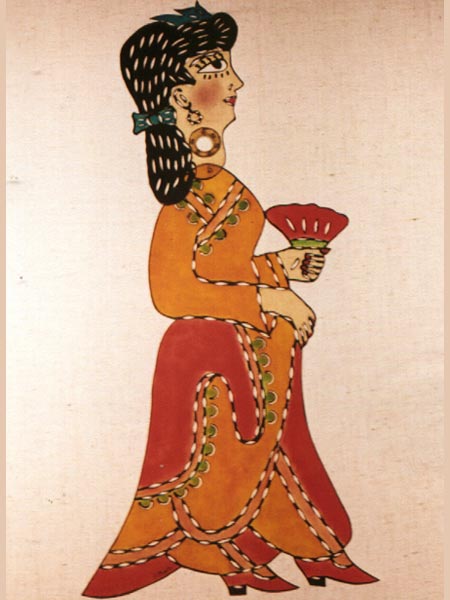
We interrupt the Karagöz Christmas broadcast to offer thanks…


…and to announce that we have reached over 100 followers and had 10,000+ visits over the 5 months of our existence! These stats are small potatoes to some, but the Karagöz puppets (and their human) are spinning and dancing with pride.  These stats represent a goal we were aiming for when we started this venture back in July.  Now we just need to keep on bloggin’ and finish the manuscript re-draft over summer 2012 so we can shop it around for sure rejection! 🙂

Tombs of Karagöz and Hacivat in Bursa, Turkey

Image of Karagoz and Hacivad's tombs in Bursa, Turkiye via Wikipedia

I started the process of writing about what I call my “road trip through cross-cultural marriage”  in large part due to inspiration from my good friend Trisha Thomas over at www.mozarellamamma.  Mozzarella Mamma is  a fabulous blog about deadlines, diapers and la dolce vita (a.k.a. an American journalist parenting kids in Roma with an Italian husband). You should check it out.  Trisha has been scribbling notes on napkins and notepads for years – and her skills as a raconteur extraordinaire are unmatched.  She always brings down the house.

Here, the Karagoz puppets are riding in my lavender scarf - typically worn by men and women near Urfa. Those puppets were telling me that my academic writing is EVEN more dry than the land in this part of Southern Turkey, near Sogmatar where we were looking for an ancient temple to the sun and moon Gods and Goddesses but found many satellite dishes instead. They were telling me to let them help with the writing - which I eventually did.

So, my skill isn’t in bringing down the house, but I do love to write, and given that I was steeped in every imaginable fairy tale compendium as a child (far beyond the Brothers Grimm),  I love to write stories as well.  As an undergraduate student, I studied anthropology – and thus my love of the observation of culture and understanding cross-cultural conflict was born.  Although my professional writing is as dry as a bone found on a hot  summer day in the desert near the Syrian border, in, say, Sogmatar, pictured here, somehow the Karagöz puppets came to me naturally as a way to spice up my observations.

These tiny wax paper puppets in my head “embody” the at-times confusing messages racketing around the brain as they relate to the management of cross-cultural moments galore in my Turkish-American marriage.   I have a few faithful followers and readers who see some glory in this madness – so I am going to keep on going.  Doing this kind of writing has been like manna from heaven in an otherwise statistics and bureaucracy-filled world of work.  So, thanks readers for your support – but most of all thanks to M. without whom, as he loves to say, there would be no slowly-by-slowly blog.  Even though I shudder with horror at the idea of him heating up chili in the can on our stove (as he learned to do in the Turkish army and which sometimes explodes) on the nights I am teaching (along with Kenne the puppet who is focused on etiquette and appearances)  –  without M. there would certainly be less light and lightheartedness in my life.  Thanks, M. for supporting this project! Seni seviyorum!

Here, Kenne is shuddering and spluttering in angry horror at the evils of heating up one's dinner in the can in which it was packaged - M.'s specialty since his stint in the Turkish army. Oh, that's right, you can't see Kenne as she is an imaginary puppet in my head. Right.

Posted in On writing about my life with the Karagöz puppets | Tagged , , , , , , | 13 Comments

On the 4th day of Christmas: Meet Celebi, the modernist


Celebi in his favorite shades of chartreuse and sunshine yellow - ever the modern lover

Yesterday, we met Khadijah, and today, we meet the puppet man to whom she is betrothed – Celebi (the c sounds like a j, so it is “jeh-leh-bee”). Celebi is a modern man. He likes modern clothes, modern thoughts – and modern love. He used to be known for being a womanizer – but his heart has settled on Khadijah – a non-traditional choice about which he receives a significant amount of flack from family, friends and community members alike. He doesn’t care a whit. Now, that’s in my own puppet world, the puppet world in my head.

According to my main source Ermin Senyer, the traditional Celebi “is presented in a sympathetic light. He is not caricatured and ridiculed as are so many of the other characters. Usually he is a dandified young man whose love for a courtesan or a girl of good family motivates the action, and provides the plays with plots. We notice he has the ability to charm the opposite sex. Firstly, a zampara, a gallant and a elegant dandy, he is also young, rich and a spend-thrift, who assumes a careful and rather self-conscious elegance of dress and, in the type of stock-role he plays, runs after women, being a well-versed but flighty youth. He speaks with an educated Istanbul accent, pouring out his Arabic and other learned phrases. He is dressed in European style. He wears a pince-nez, he carries a cane and sports patent leather shoes. He wears a clerical style frock-coat, which in cut, hue and the shape of the collar, resembles precisely the -stambouline- , so named from its origin in Istanbul.”

And here is Celebi in his second favorite outfit, the stripey one

Celebi is the puppet who leads my eye to the modern design of the Bauhaus movement, the Eames chairs, and the simple, elegant lines of the Gropius House, in Lincoln, Massachusetts. Celebi likes Mahler symphonies (he kind of drives me nuts with that – I can’t take it) and reads Foucault as if it is going out of style. He is constantly “deconstructing” his surroundings, his thoughts, his neighbor’s thoughts – it goes on and on. He gets rather perserverative at times. He is the puppet who eggs me on when I am in hyper-analytical-academic mode, having a discussion with my ivory tower townies or writing a paper. He pushes me to be smarter, to read more and to write more.

He also, however, pushes me to remember the important things in life – that none of the thinking, reading or writing is good unless you have found true love. He is always reminding me to spend MORE time with M. and to be a better partner. He thinks, M. is also a modern man, and while some might call him a kılıbık when he does “women’s work” (such as laundry or cleaning or some such), Celebi is cheering him on the loudest of all the puppets.

Posted in Introducing the Karagöz puppets, On writing about my life with the Karagöz puppets | Tagged , , , , , | 12 Comments

On the 3rd day of Christmas: Meet Khadijah, a worker from Egypt


Do you see Khadijah? She is in back, tending to the women in the Sultan's harem (Thanks to http://www.turkishculture.blogspot.com for the image)

Today we meet Khadijah, the Karagöz shadow puppet who represents the far-flung citizens of the Ottoman Empire – in this case – puppets from Egypt.  Khadijah was a Black African woman raised in Egypt, but was captured during a battle, and brought to work at the Sultan’s palace in Bursa as a non-voluntary migrant worker (this is how she likes to frame it, vs. as a “slave,” and it is her choice how she categorizes herself, after all).  Now, in the blog post header, I say “worker” but I do want to acknowledge that this is really just revisionist history.

She got back at everyone, though, she drank from the fountain of youth when nobody was looking – as did the other Karagöz puppets in my head once they befriended her.  I am learning as she whispers into my ear tonight – and therefore this explains why she served the Sultans again and again over the centuries.  You can see that the clothes she is pictured in here in the image to the left are quite modern – not what would have been worn when the Sultan’s residence was still in Bursa, back in the early days of the Ottoman Empire.

I just asked Khadijah why nobody noticed that she never aged – why nobody suspected that she had sipped from the fountain of  youth – and she looked at me with all the attitude of a homegirl from the South Bronx where I used to work – “Girl! Are you serious? Come ON! I mean, I’m a Black woman! And a servant!  Do you REALLY think they are gonna notice me? Really? Lady, you gotta get your head screwed on straight and start seein’ the world for what it REALLY is – and was even back then!”  (Insert teeth-sucking sound in disgust now).  OK, I get the point.  Point well taken, Khadijah.  After years and years of serving the ladies, Khadijah finally obtained a place in the chorus of dancing ladies…but she really has more responsibility than that, as she truly knows the ropes of life backwards and forwards.  She is a regular visitor and commentator in my life.

In any case, you first met Khadijah back in 2004, when I was flying to Istanbul for the first time with M., to meet his family.  She is also a woman in a cross-cultural marriage-  well – she’s not married yet – he’s saving for her trousseau, which will be all in red, her favorite color (when she isn’t wearing yellow).   The he in question is Celebi, who thinks he is the Sultan of the puppets sometimes – but is really a forward-thinking man of the modern era – rejecting much of what stands as acceptable in the modern day.  Khadijah loves him with all her heart – and they face the world strong in a Black-White relationship that challenges social norms in any era.

Other than drinking from the fountain of youth, which, of course, you only need do once in your life, Khadijah loves rosewater lemonade.  She makes it ever summer, and sometimes sneaks in a little bit of mint from the garden.  She is a fabulous cook – who wouldn’t be after centuries of practice and technique development?  None of her dishes EVER burn, nothing tastes overly salted, overly herby or overly spicy.  She knows just what M. likes to eat and tries to guide my hands with her heart – but sometimes the messages get lost along the way.  She is a stallwart friend, positive (yet sassy), and will defend me to the end.  She encourages me to stand up for myself when I am being taken advantage of  and always looks for the quiet yet diplomatic route to get things done behind the scenes.

Posted in Introducing the Karagöz puppets, On writing about my life with the Karagöz puppets | Tagged , , , , , | 6 Comments