
Banksy’s response to the Charlie Hebdo tragedy (Image from thedrum.com)
In the haze of the morning, I awoke to the chants of a French protest group, or so I thought. Opening one eye, I noted the entire troupe of Karagöz puppets was lined up on my bureau, waving their fists and chanting “Nous Sommes Charlie Hebdo!”
Of course, the puppets were chanting in support of the Parisian newspaper brutally attacked by, apparently, Muslim extremists…but actually, they are really chanting in support of the right to engage in satire, the right to free speech.
“You see,” Hacivad Bey, the learned Sufi elder puppet, “we are vintage satirists!” Karagöz puppets have been satirizing Ottoman-era characters since the 1300s – we know what it is to be edgy! We leave no stone unturned – we make fun of Turks, Arabs, Jews, Christians, Kurds, Alevis, Sufis – and anyone else you can think of! We know what it is to express our satirical views in the face of a skeptical audience. We also, however, know the power of satire in allowing people to step aside from themselves and look at matters in a new light.”
Yehuda Rebbe, the wise Jewish elder steps up now, despite the fact that he has such a heavy heart about the attacks in Paris. “In fact, M’Lady,” he says softly, “did you know that in the late Ottoman empire – and the young Turkish republic, there was a satirical newspaper named “Karagöz?” Between 1908 and 1955, this satirical newspaper referred to itself as ‘Political, Humorous Public Newspaper.’ The Karagöz newspaper used clear and simple language in combination with cartoon satire in order to enable society to grapple with current issues.”
For a bit more of a history of the ways in which Karagöz puppetry was used in a satirical manner, check out this 1997 article from Hurriyet Daily News below…a key paragraph of which describes the social context Karagöz satire succinctly:
“…by the first half of the 19th century Karagoz’s stock characters were being used for agit-prop and social satire, frequently imitating high officials and Ottoman ministers. This was in particular evidence during the reign of Sultan Abdulaziz and Abdulhamit II when censorship was quite rigid and popular entertainment one of the safest forms of political criticism. “A Karagoz show,” says a foreign witness of the time, “is as fearless as a militant newspaper. No one is spared, except maybe the Sultan, Karagoz heaps judgment on the Grand Vizier and sentences him to the prisons of Yedikule..he lashes out at the Allied Admirals of the Black Sea fleet, and the generals of the Crimea armies..”
Shadow play and satire: the history of Karagoz
“The holy month of Ramazan is rapidly approaching, and this year Turkish people may well be rooting through their grandparents’ trunks to dust off shadow puppets long out of action as the traditional entertainment for the long nights between fasting hours becomes fashionable once again.
By Molly McAnailly Burke
Istanbul – Older Turkish people will remember the special atmosphere during the long nights of Ramazan when they were children. When iftar, the meal with which one breaks the day-long fast, began at sunset, everyone rushed home to eat, slept a few hours and then rose again to eat, making sure their bellies were full before fasting began once more at daybreak. Often people stayed awake through much of the night and sought entertainment in the form of Karagoz shadow theatre, which distracted fractious children and gave relief to beleaguered mums and grandmums who’d been cooking like the clappers for an extended family.
This tradition began to die out when Turkey became a secular democracy under Ataturk’s revolutionary reforms, and the old puppet masters passed on without leaving apprentices. But thanks now to people like the Celikkol family in Bursa, and a new Karagoz school which has just opened in Istanbul, efforts are underway to rejuvenate this beautiful and specifically Turkish art form.
Shadow theatre may well have originated in the Far East, having first been recorded in Java, China and India. Some scholars believe it was brought through Asia into Turkey and Europe by migrating gypsies about 1,000 years ago.
But Sultan Selim I’s delight in a shadow play depicting the hanging of the last Mameluke Sultan in 1517 is most definitely on record, indicating that the tradition is likely to have come from Egypt via early Arab trade with Java, which even today boasts translucent skin puppets operated by sticks very similar to those of Karagoz.
We also know with certainty that there was a very well established puppet tradition in Ottoman times. During the circumcision ceremony of Sultan Murat III’s son in 1582, there is a lengthy description of shadow plays performed by Arabs, who seemed to have been practising the art as early as the 13th century.
But as any kid who’s ever camped out or had a slumber party can tell you, there’s something about shadow maneuvers in the dark that is both mysterious and thrilling, and a strobing flash light can be just as effective as an open fire. Everyone knows how to make a rabbit on the wall, tell ghost stories with things going bump in the night, and get generally giddy.Who was the “real” Karagoz?
“Karagoz”, the black bearded comic character who takes center stage in Turkish shadow theatre, is believed to have been a blacksmith by the same name who was involved in building a Mosque in Bursa during the reign of Sultan Orhan, (1326-1359). According to legend the banter of the blacksmith and Hacivat the mason was so lively the workers laid down tools to watch the performance and the Sultan had the two wags hanged. The facts of the case are uncertain, but the names of Karagoz and Hacivat were indeed recorded on the building registry and their graves are in Bursa.
But whatever the origin, by the first half of the 19th century Karagoz’s stock characters were being used for agit-prop and social satire, frequently imitating high officials and Ottoman ministers. This was in particular evidence during the reign of Sultan Abdulaziz and Abdulhamit II when censorship was quite rigid and popular entertainment one of the safest forms of political criticism. “A Karagoz show,” says a foreign witness of the time, “is as fearless as a militant newspaper. No one is spared, except maybe the Sultan, Karagoz heaps judgment on the Grand Vizier and sentences him to the prisons of Yedikule..he lashes out at the Allied Admirals of the Black Sea fleet, and the generals of the Crimea armies..”
“Even the press in Europe is not so aggressive,” wrote another witness. “Countries like America, England and France are much more restricted in political criticism than Turkey, which is a country ruled by an absolute monarch.”
Karagoz was also allowed to be lewd and licentious, in the manner of commedia dell’arte, and observers expressed shock that women and children were allowed to sit through the performances. In 1861 in Pera, today’s Beyoglu, there was a permanent Karagoz theatre at Petit Jardin des Fleurs which was enormously popular though frequently obscene. In the tradition of Priapus, Karagoz is frequently endowed with an unwieldy, detachable phallus where his large left hand is.Karagoz rises again
Up until recently the Karagoz tradition had all but died out, partially because the skill took so long to learn and also because the last remaining exponents of the tradition had become conservative in style and did not want to admit anything new or regenerative.
Scholars such as Mehmet And also suggest that possibilities for innovation were limited since Karagoz and indeed much Turkish traditional theatre relied heavily on a vital relationship with the social structure of the Ottoman Empire during the period of its decline.However, to judge from the humor in Turkish adult comics such as Leman, today’s political circus and rapid social change is just as worthy of satire as conditions in late Ottoman times, and this point was not lost even in 1968, when the late left-wing satirist Aziz Nesin won a Milliyet competition for new Karagoz texts which were later staged in Istanbul.
But over the last five years great efforts have been made to reclaim this beautiful art form for the future, as witnessed by the 4th International Karagoz Festival which finished in Bursa on November 24 but will continue with seminars and training in the shadow theatre tradition over the next month.
The Karagoz Festival has been organized by the Celikkol family who operate a gift shop in the Bursa covered bazaar. Sinasi Celikkol, the owner of the gift shop, had received so many queries about the tradition from foreign visitors over the years that he and his family decided to gather together the few extant Karagoz shadow theatre players (some of them foreign) in a festival, the first of which took place in 1993.
One such traditional artist who attended this year’s festival was 97-year-old Hadi Poyrazoglu, known to be the oldest living practitioner of the art. He started working on stage when he was 17, and travelled all around Turkey, Yugoslavia, Pakistan, Greece, Bulgaria, Saudi Arabia and Syria for 80 years to give performances. He performed in front of six presidents including Ataturk and Fahri Koruturk.
This year the Celikkols were also lucky to get support from the Bursa municipality, and have opened a Karagoz theatre and museum in Cekirge across from the cemetery where the original Karagoz himself is supposed to be buried. The organizers have ties with UNIMA, the international marionette organization based in Paris. For more information, ring (0224) 221 8727.
Turkey’s first Karagoz school also opened this month in Istanbul. Education will be given at Children’s Foundation Culture House.
The Chairman of the Children’s Foundation, Mustafa Ruhi Sirin, stated that Karagoz was the pride of our national culture and that when one searched through entertainment traditions of our people throughout history, he would find that the most significant included the arts of Ortaoyunu (which used live players), Meddah (storytelling) and Karagoz (which was restricted to puppets).
“There were Karagoz courses in the past,” he said, “But what we would like to provide is a mini-conservatory education. We learned that the state theatre has also decided to start a Karagoz course, and our aim is to educate our students as apprentices for their masters and to build a bridge that will lead to the world.”
The Karagoz School’s General Art Director, Tacettin Diker also expressed his happiness that the Children’s Foundation has become a performance center for Karagoz. “I have grown up with Karagoz,” he said. “I have known the old masters. Now I am here to teach the young generations what the old masters left me. Don’t you believe those who say that Karagoz is dead.”
The third speaker was Orhan Kurt who is the founder and second chairman of the International Shadow Theatre and Puppet Plays Centre. Kurt said that he was very pleased with women’s interest in the school and that the majority of students were female.
A puppet artist from Holland’s Karagoz Institution, Henk Rotermundt, came to Istanbul to attend the ceremony and to give support to the Karagoz School project. He stated that their main objective was to introduce Karagoz to the whole world and to found an international Karagoz institution.
The first graduates of the course will finish their education in March.”
Please share if you like this!

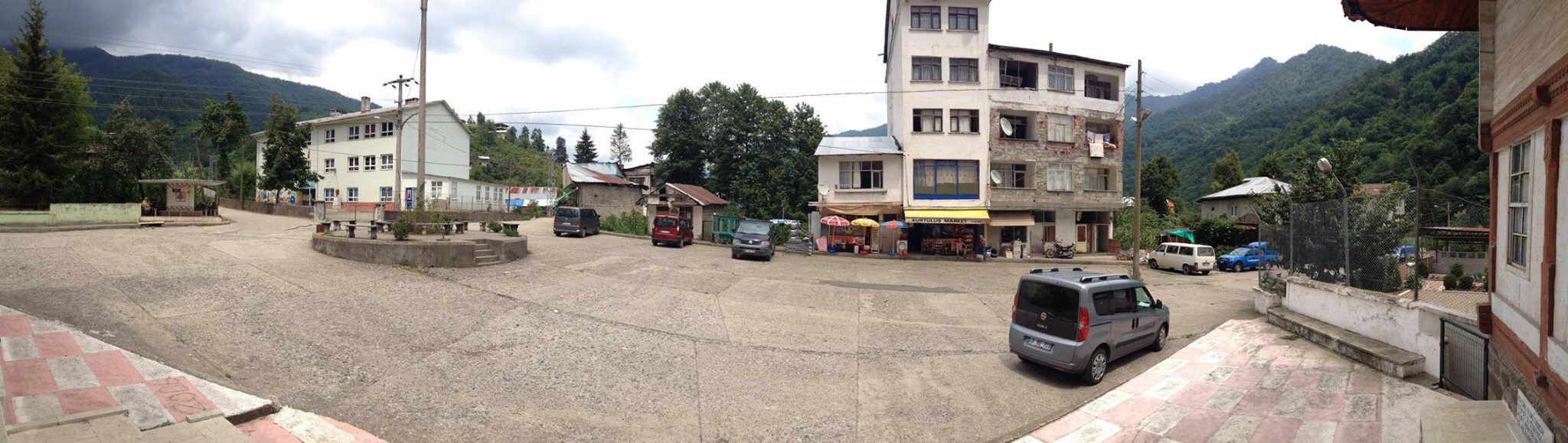
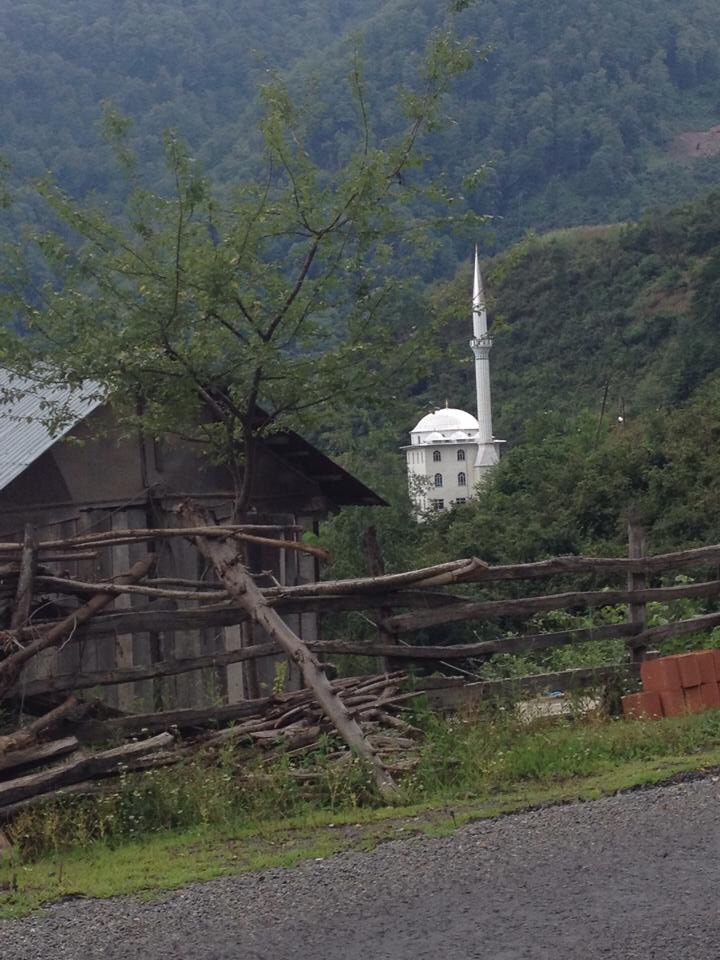
 green mountains, tea plantations and twisty roads.
 As we entered the sanctuary, I was reminded of a circus tent upon looking at the inside of the dome…it was painted in an almost gaudy red, yellow and blue and augmented by a crystal chandelier as are so many mosques in Turkey.
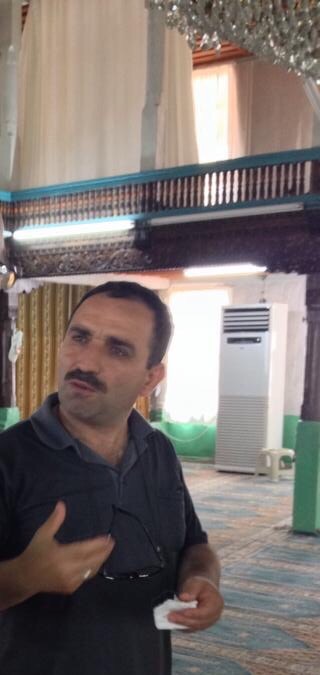 We heard the Imam discussing something with his congregants in the women’s gallery…but upon catching a glimpse of us, he excused himself from the ladies and bolted down the stairs to greet us. The spry and energetic man greeted us warmly and heartily, each one. I remember feeling surprised that he shook my hand and then feeling embarrassed that I thought that. I thought that that was probably a result of listening to Kenne, the queen of manners and maintenance of ladylike behavior puppet along with her handmaiden Zenne the nervous Nellie like a bowl of quivering jelly.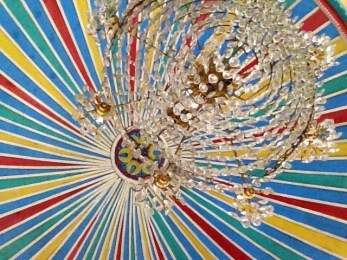
 had to really work with my congregant for him to understand the error in his ways. There is so much pain in the world, and it pains me to see it play out this way.”
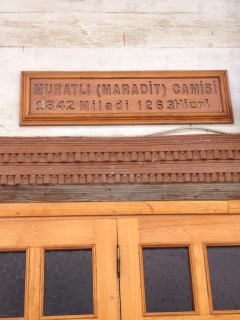 Yehuda Rebbe and Hacivad Bey, the religious elders of the puppet troop had the final word “There is a lot to learn from a small mosque in a far corner of the world… It’s harder to learn to live together and celebrate one another’s faiths and cultures, isn’t it? But we must.”
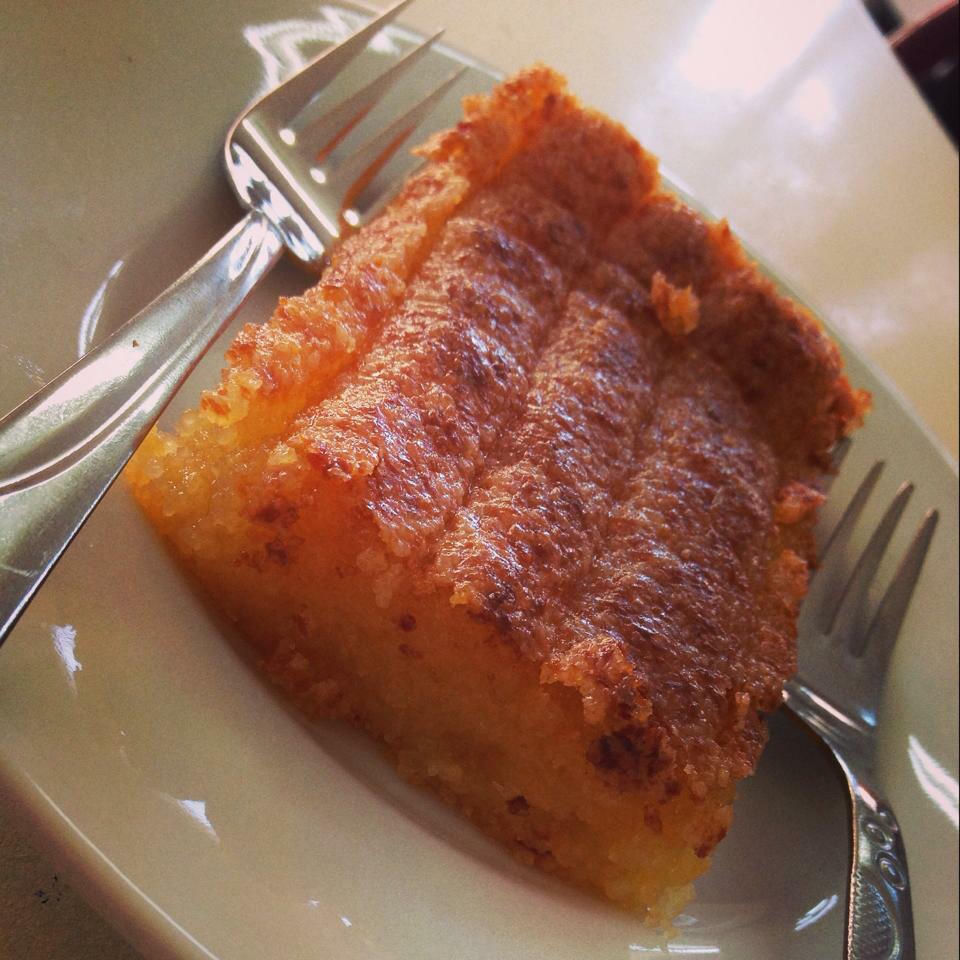
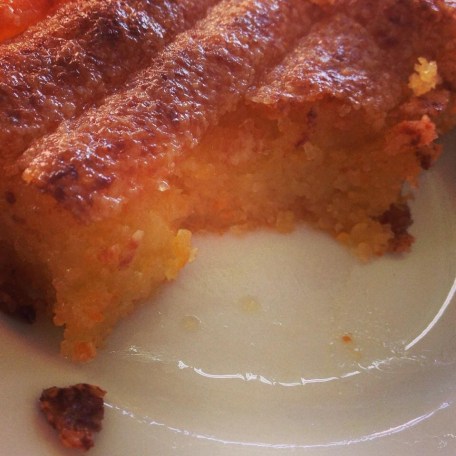 Mercan Bey reminds me that in all of his travels near and far, this unctuous and sweet treat is an artery clogger to be sure. As my Dad used to say, there are two kinds of really good food – “instant artery clogger” and “instant cavity.”


 Slowly-by-Slowly