Enjoying a moment of freedom and hilarity with Kalinka and Karagöz


As we descend the hot stone steps for the white pillbox house overlooking the cement beach and swim parade, we smell good smells through the salty steam escaping the kitchen.  Upon entering the kitchen, we find Kalinka (the Moldovan maid who has won my heart and with whom I communicate in broken Russian) hard at work on this evening’s dinner.  She is singing at the top of her lungs.  Filled with sunshine, smiles and a wicked wit, this truly zany and unbroken Moldovan house worker raises my spirits just at the sight of her.  I have come to love the fleeting moments of hilarity when it’s “just us chickens, boss.”  M.  commences engaging Kalinka in a long and rousing story in Turkish, to which she is alternately hooting, hollering and howling about.  I catch snippets – I hear M.’s brother’s name, the words “baba” (father), “tuvalet” (toilet) and “belediye” (town hall/officials).  Even Karagöz is standing at attention – waiting for the next move, the next joke before he takes his cue to roll across the floor in thunder-headed glee.  Karagöz is too busy to explain the story to me – but I don’t care.  I feel as though I have returned to a girlfriend’s house where I can really let my hair down.  I feel relaxed and not tense about what I should and should not be doing.  Perhaps this is why I notice the lack of Hacivad, manners-man and general inciter of non-riot in the form of being respectful by any means necessary. Hacivad has retired to the library, to catch up on the latest interpretations of Rumi in the modern age.

Celebi is also nowhere to be found – I later learn that he wandered off while we were in Bodrum, but I can hear the ladies dragging him down the steps by his ears, and back to the kitchen of his fiancée, Khadija, a freed slave from the far reaches of the Ottoman empire in Egypt.  “The 20th century has nothing on globalization,” Karagöz cries, “look at this messa peeps up inna here, Egypt, Turkey, the New World, Moldova!”  I make a mental note to talk to him about the oddity of his MTV-infused lexicon the next time we have a quiet moment.

Collapsed on the white canvas-covered couch, I let the Turkish hilarity roll over me along with the breeze, I am exhausted and my feet hurt. There is an arbor over my head, covered with grape vines, and I can hear the massive, two-story-long futbol flag flapping in its bourgeois trappings for all to see.  I am glad to hear the fountain of Turkish from M.  I know that the constant translation from Turkish to English that M. has engaged in all day is wearing, to say the least – it is as if a torrent of need-to-express Turkish is rolling out of his mouth at breakneck speed.  Although he is fluent in English, translation is not his strongsuit, and he gets exhausted quite fast.  “There is a reason,” he points out on a regular basis, “that I trained as an artist, and not as a writer.”

For right now, he is clearly on a roll and the kitchen is alight with laughter.  I am happy even though I don’t understand the story, I am just happy to be there and be around lightness and silliness.  The space on the wall opposite me fills with shadows cast from his hands gesticulating wildly as he twirls about the room in storytelling mode.  Who knows what he is talking about, but they are having fun.  Soon, as the need-to-speak-Turkish-unobstructed fails, he calls me in, and gets some cool water from the fridge.  Kalinka lets him do this, she knows that we prefer this when nobody is around, taking care of ourselves, even if we are depriving her of a bit of her job’s work, she has more than enough to do.  I am revelling in this family-free moment, when the “just folks” trio of us can “hang” like normal people.

M. and Kalinka are speaking in Turkish, M. and I are speaking in English, and Kalinka and I are speaking in our broken Russian.  In addition to my collection of Russian cursewords, I remember idiotic bits and pieces, such as “cement mixer” (“betonomashalkah”) and “hydroelectric power plant” (“geedrohstanskee”).   Clearly, I think, I had no idea that my teacher was in fact a dyed-in-the wool communism fan.  How did I miss that? Kalinka begs me to say the words over and over again until she is crying from laughter.  We carry on like this for a good hour before we hear the spector of family on the way…an ephemeral moment, etched in time.  Kalinka soon moved on, farther south, to be nearer to her husband, a yachtsman near Kalkan, and we never saw her again, but she was an indellible help to me during that first visit.  Большое спасибо, Kalinka.

P.S. Kalinka is not the real name of the person in this true story!

Posted in Cross-cultural learning moments | Tagged , , , , , | 6 Comments

Escaping the death star by dolmuş: Bodrum bound, Islam not found


White walls of Bodrum, with red floral accents

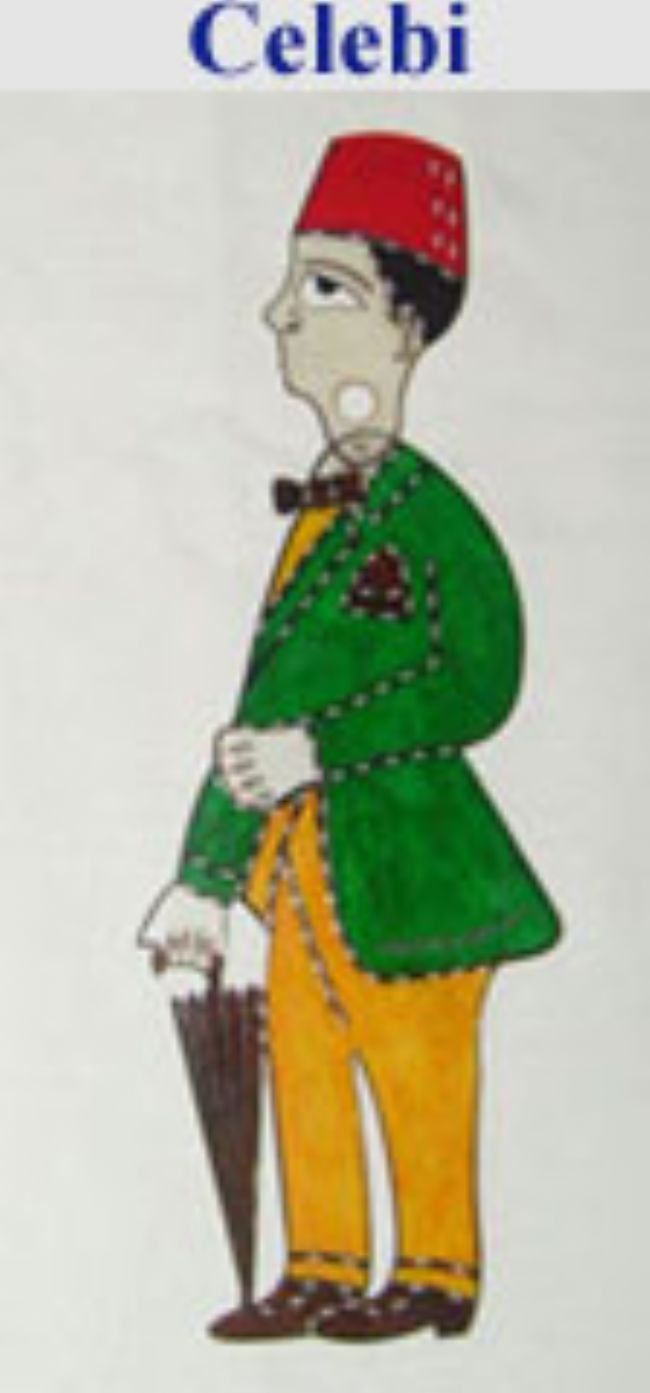
After all of the obesity battles, I throw in the towel, so to speak, and we decide to spend the next two days exploring Bodrum town and environs. When M. and I decide this in the quiet of our room in the early morning, the dancing chorus of ladies in my purse are ecstatic “a day trip,” they cry with excitement, moving about my purse in a way that takes me ever-so-slightly off balance, “can we go to the hamam?”  One elderly voice, the leader of the chorus who explained the moon dance the other night is discernible amidst the din,  “Oh, too bad, it will be Wednesday and Thursday, and that is not the women’s day there, I fear.”  Suddenly, I see Celebi, who hasn’t been about in a few weeks, sitting on the ledge of the window, next to our water carafe.  Resplendent in his vibrant green finery, “a fine plan, for two in love.  I’ll come along to scope the scene, cruise the muses before my nuptials.”  Hacivad appears next to him, glasses down to his nose in a holier-than-thou stance, “cruise the muses you shall not – our task here is to guide m’lady in her meanderings in these parts, not to corrupt your marital union with Khadijah before it even starts!”  We leave the arguing puppets to take an early-morning walk along the parameter of the compound, counting the machine gun guards at the posts along with the bird sounds in the breeze.

Celebi - the Karagoz shadow puppet known for his love of the ladies...

Later that morning, M.’s brother hauls out the massive BMW that I swear, feels steel-encrusted.  It is so lock-down strong, he tells me one night, that all of his valuables are stored in it, as opposed to the house. The BMW seems to have a life of its own – humming-hurtling down the highway to town, in between jalopies and donkey carts and other cars of its own ilk.  The feeling of exclusivity, of floating on air above all other folks, these feelings are things I have never felt, and I don’t know what to make of it.  I am having some sort of in-body/out-of-body class-based experience, I think.  Back in my neck of the woods in New England, one does not show one’s wealth, it is hidden away, in favor of communing with the larger community.  So, this feels a bit alien, and I don’t really see the need.  M. does not look the part of a BMW passenger, his worn and comfortable coral-colored t-shirt khaki shorts and dark blue flip flops from the Gap set him aside.  As the great hulking steel thing called the BMW cavorts down the highway in tire-to-pavement obscenity, I am reminded of Luke Skywalker, escaping from the death star in just the nick of time.  Karagöz lets out a Chewbacca-like howl from the dashboard – as if calling the dogs out to hunt, but is soon narcoleptically sleeping once more in the folds of my dress.  Hacivad rolls his eyes.  Celebi is plastered to the window, looking at the pretty ladies. The chorus of dancing girls are just biding their time, waiting to alight in the city centre.

Dropping us at the marina – M.’s brother bids us a good day – and heads down to Marmaris for business his prayer beads rotating in one hand as his suave-move driving takes over the navigation of the steel machine as it glides out of town with grace and ease.  Karagöz bids him farewell with a “bye bye, suckaaaaaaaaaaaaah,” and I wonder if he is watching just a bit too much vintage MTV for his own good.

The click-click sound of the prayer beads sticks in my head as the driver’s side blackened window of the BMW closes.  “At least he is a praying man,” I hear one of the dancing chorus of ladies say, “he keeps his prayers close to him.”  I am struck by this observation, as I find this latter accoutrement of M.’s brother interesting, as M. has told me he was raised in a very secular family.  His brother identifies as Muslim, part of the Sun’ni majority.  I see no evidence of worship or culturally Muslim traditions here in this summer house – nor did I see them back in the city when I met the family for the first time. Although bacon and pork products are nowhere to be found so far in Turkey,  whisky, rum, beer and wine abound in the house.  Nobody is covered.

Hacivad tries to explain “you see, m’lady, our expectations of Islam from the media in the west from whence you hail, they belie the true nature of Islam in Turkey.  This is Turkey – none and all make sense.”  I am curious about all of this, not really clear on what a secular state with a majority of culturally Muslim people truly looks like.  I find myself hesitant to ask anything about religion, as it is a sensitive topic for M., but I have gleaned one thing from watching and listening carefully when the brothers and the sister-in-law are speaking in English.  The mosque, I have learned, is a good place to make business contacts, perhaps this explains the prayer beads.  I am reminded of some Hollywood B movie, when an agent adopts an alcoholic personality, as the contacts in AA are so amazing.  Anywhere I look in the house, the people, the newspapers, the surroundings, I do not find Islam, if anything, in fact, I find a reaction against it.  Still transfixed in the newbie way when the call-to-prayer sounds, I look around a bit frantically, wondering if I should cover my head in the street, pull my dress a little lower, or generally do something respectful.  None of the people around me in the Bodrum castle seem to even notice the call.  I think part of me expected folks to just drop everything, and run to the mosque, as crazy as that now sounds.

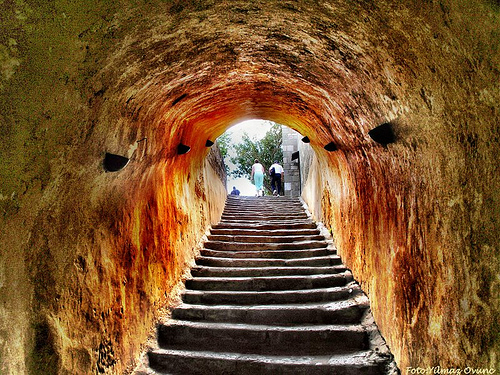
A magical entry to Bodrum castle…perfect for a newly-in-love date…bereft of praying during the call-to-prayer one hot morning in July 2004

Focusing back in on being with M. as opposed to getting lost in my overly-analytical mind, I slip my hand into his, and ask about the tiles before me.  He proceeds to narrate with the great detail that only an art historian can draw upon, the nature of the ceramic glaze I am looking at.  It is a giddy time in our new relationship, full of hand-holding, street wandering, endless talking and marathon explaining.  At lunch by the harbor,  M. tells me about Bodrum back in the day, about his shell collecting exploits before too many tourists were about, and how clear the water was. His eyes mist when he tells of his last dive, when a friend went too deep, too fast, and despite many efforts, was lost to the sea.  The group of friends tried to save him without descending to the depths at a safe rate, and M. has never been able to dive again.  “Did it make you think about God?” I ask, out of the blue.  “No, why do you say that?”  “Nothing, nevermind…”  I feel as though any chance I have to get at the riddle of Islam with this man and this family and this country, I have to take, and it takes some time before I realize that it just is what it is.

Moving from religion to lemonade, we resume our street-wandering.  We peek over fences and through iron gates at the oasis heavens within.  We sip impossible amounts of ayran wherever we go, to beat the heat.  We run for cover from the sun to the canvas-covered part of the bazaar.  Ambling through the back streets, we are generally blinded by the white in the whitewash-swathed town.  In addition to falling more in love with M., I also fall in love with the tiny corner jeweler by the marina, an artisan’s booty spot, to use the pirate term.  My feet in sandals grow used to the curve of cobblestones, aching slightly in their unfamiliarity with the required curves of the foot.

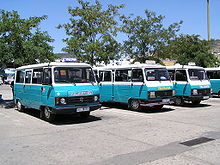
As the sun gets higher and hotter, and the body gets tireder and tireder to the extent that no amount of air conditioning or ayran can address, we head back to the house.  On the way home, we opt out of the taxi M.’s brother suggested.  I have never been much of a fancy travel gal, preferring to go local inasmuch as possible.  My college application essay talked about the time I bagged an Intourist guide in Russia (when it was Russia) to ride the subways all over town, for an entire day.  It was an education all its own – not only on geography and an ethnography of the Russian population in Moskva, but also in art history, as the stations were filled with amazing works of art.   This is one of the reasons M. is psyched about the me part of our relationship.  A hardened rough traveler himself, prone to ignore buggy rice in Kashmir, bombs in Sri Lanka or rotting-offal-smelling squat toilets in Madagascar, nothing can shake this guy.  If nothing else, I have to keep up.  A dolmuş (pronounced “dolmush”) is the least I can do, in this regard.   In a fit of paranoid please-the-fatherness that does not fit with his generally-devil-may-care attitude, M. makes me promise not to tell my father that we travel by dolmuş back home to the gated community nearby.  This, of course, makes me even more interested in travel by dolmuş.  Travel of this nature involves a lot of people crammed into a minibus – but way fewer than in a Kenyan matatu (same general idea as a dolmuş) I traveled in some years ago.  I observe the passage of coins up to the driver, the implicit trust of money changing hands surprising me some – a far cry, I think, from the individualism I am used to.  I note the chickens on the bus in the basket, the workers done with an early shift on the way home, giggling Turkish schoolgirls on holiday, a young mother who is perhaps taking her baby home from the doctor’s office and a swarm of British tourists sunburned and burdened with the bags of magic, sun-filled trinkets to bring back home.  My mind whirls with them all, with my confusion about religion, about the class differences I am experiencing – sort of a cross-class whiplash today, I think.

Hacivad nods approvingly, and quotes from Rumi as we walk from the gate of the guarded compound on up the hill, and it is these words from Rumi that ring in my ears for the rest of the evening:

“This Being human is a guesthouse,
Every morning a new arrival,
A joy,
A depression,
A meanness,
Some momentary awareness becomes,
And comes as an unexpected visitor.

Welcome and entertain them all,
Even if they are a crowd of sorrows,
Who violently sweep your house empty of its furniture,
Still,
Teach each guest honourably,
He maybe clearing you out
For some new delight.

The dark thought,
The shame,
The malice,
Meet them at the door laughing,
Invite them in,
Be grateful,
For whoever comes,
Because each has been sent,
As a guide from beyond.”

Posted in Visits from the Karagöz puppets | Tagged , , , , , , , , | 9 Comments

Turkish drivers and Boston traffic: Chihuly’s sculptures somehow capture it!


Karagöz is ecstatic.  He is swinging along the mavi boncuğu evil eye beads hanging off of the car mirror.   “We’re on a date! Let’s riot, let’s rock the house!  Let’s get wild and woolly!  We’re on a date.”  Hacivad interrupts his meditating on top of the neutral tab on the gear shift, “no, Karagöz, YOU are not on a date, they are on a date, just let them (and me) commune with nature a bit.”  Hacivad does not seem to realize that careening off of Storrow Drive and onto the Fenway at breakneck pace does not constitute what I would consider communing with nature, but that’s where he’s at, so what can I do?  Though we don’t have children of our own, we have lots (and lots) of children, youth and adults in our life, especially during the summer, and it’s been a while since we have done something fun, just the two of us.  Squinching his face into a twist, Hacivad barely opens an eye, maintaining his perfect meditation posture “just keep breathing, ok?”

As usual, I am breathing deeply in order to make it through the Turk-driving-in-Boston experience.  While Boston drivers are well-known for their insane driving, Istanbul drivers take the cake.  They are nowhere near Roman drivers, to boot.  But before I completely malign my beloved, he is an amazing driver, and, knock on wood, has never been in an accident.  Once I drove in his passenger seat in Turkey, I completely understood why he drove the way he did, and I felt very secure.  Translating that back into our life in the States has been a bigger challenge and we have certainly had our share of driving-related arguments.  My therapist laughed at this, “do you know how many people have hum-dingers in the car?” she snorted when I expressed my concerns about this.  Today, however, the deep breathing seems to be working, maybe the heat is helping or maybe all of these years of practicing life together have helped, either way, I am feeling pretty calm.  Hacivad chuckles in approval as he can read my mind.  I wonder how his waxy, paper self can fold into the lotus pose so easily.

We are heading for the Chihuly exhibit at the Museum of Fine Arts in Boston for our date – an exhibit which holds some special meaning for us as Chihuly is part of the reason we began dating.  Dale Chihuly is best known as the shaggy haired, pirate eye-patched eccentric glass artist who creates glass environments all over the world.  Many Americans know him as a result of seeing his ostentatiously delicious glass ceiling in the Belagio Hotel in Las Vegas, Nevada.  I was first introduced to Chihuly’s glass art by my cousin, who gave me a book about the famous installation in Jerusalem, “In the light of Jerusalem, 2000.”  It was the curious, undulating shapes that stayed with me once the book landed in my storage space – and led me to choose an image of Chihuly’s for the Internet dating site profile that connected us.

It was the Chihuly, my husband jokes, that made the online profile catch his eye.  Although not a major fan, my husband is an artist, and was happy to see that I had some interest in art, something that was apparently lacking in the other profiles he came across.  I hear Kenne and Khadijah swoon from inside of my purse.  I wonder why they are hiding there. Karagöz screeches with sarcastic delight.  “What a lovey-hovey-dovey story!”  Hacivad does not bat an eyelash.  “Was it love at first click?” Hacivad’s arm turns into silly putty as it stretches out to grab Karagöz off of his swinging beads, tossing him out the window.  “Chihuly – it’s all for loooooooooooove…..” he cried as the wind pulled him away into the tunnel behind the speed of our car.

My attention is split three ways between my Chihuly memory lane, the Karagöz slapstick show in my brain and my husband’s narration of whether and how he can break parking rules.  On our third roll around the block after finding the parking lot full.  “We should have taken the subway,” I protest. I then  try to pre-empt each potentially illegal parking attempt by shouting out “hydrant,” or “resident parking only!” I hurumph each time he stops where we have failed to find a legal parking space before.  “Maybe if I back in like this, it will not SEEM like we are breaking the law,” he says, ignoring my dark look angled his way.  Lather, rinse, repeat – this is how the next 15 minutes are spent.  My main goal is to be able to compartmentalize the grump long enough to not ruin this nice date, our first out in a long time.

Seeking the solace of the sun on my face after we finally park, about a half mile away, I grab his hand and commence discussions of all that has been on our “back burner” during these busy times.  As we amble up to the museum, drenched in sweat from our walk on the hottest day of the year, M. begins to plot ways to jump the line snaking around the block.  I turn to the proverbial camera in my head, otherwise known as Karagöz, and throw my hands up in despair.  You can take a Turk out of Turkey, but you can’t make them avoid trying to cut the line.

Posted in Cross-cultural learning moments, Visits from the Karagöz puppets | Tagged , , , , | 9 Comments